


Connecticut Crumbling Foundations Claims Understanding Collapse Coverage and Insurance
A cracked basement wall is usually a repair problem. In parts of Connecticut, it can become a six-figure property crisis.
Crumbling foundations tied to pyrrhotite have affected homes across northern and eastern Connecticut, especially houses built with certain concrete aggregate during the late 20th and early 21st centuries. The damage can start as hairline cracking, then spread into a spiderweb pattern, bowing, flaking, and loss of structural capacity. For many homeowners, the hard question is not only how to fix the foundation. It is whether anyone will pay for it.
That question has made pyrrhotite-related foundation claims one of Connecticut’s biggest property insurance issues. The dispute sits at the intersection of geology, concrete chemistry, insurance policy language, court rulings, and a state-backed funding system created because ordinary insurance often did not solve the problem.
This article is informational only and is not legal, insurance, or financial advice. Coverage depends on the policy language, facts, timing, inspections, and applicable law.

Why pyrrhotite can make concrete foundations fail
Pyrrhotite is an iron sulfide mineral. When concrete contains aggregate with pyrrhotite, the mineral can react with oxygen and moisture over time. That reaction can cause expansion inside the concrete. As the concrete expands, it cracks, weakens, and may eventually lose the ability to support the structure above it.
This is why many affected foundations do not fail right away. A house may look normal for years. Then the basement walls begin to show signs that do not look like ordinary settlement.
Common warning signs include:
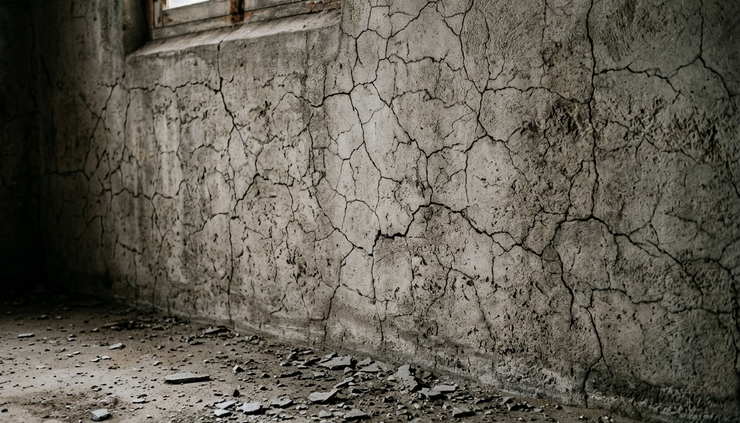
Map cracking A web-like crack pattern across concrete walls.
Horizontal or stair-step cracks Cracks that may suggest movement or pressure in the wall.
Flaking or scaling concrete Concrete that sheds layers or feels soft and deteriorated.
Bowing walls Foundation walls that curve inward or outward.
Water intrusion Water entering through cracks as the wall condition worsens.
The core problem is that pyrrhotite-related damage is usually progressive. It does not resemble a sudden event such as a fire, windstorm, or vehicle impact. That slow timeline is one reason ordinary homeowners insurance has been such a difficult fit.
Why collapse coverage became the center of the dispute
Most homeowners policies cover direct physical loss caused by covered perils. They also contain many exclusions. Foundation deterioration claims often run into exclusions for wear and tear, settling, cracking, faulty materials, defective construction, or gradual deterioration.
That is why many Connecticut claims focused on collapse coverage.
Older homeowners policies often included an additional coverage for collapse under certain conditions, such as hidden decay or defective materials, if the collapse was caused by a covered reason and certain requirements were met. The key fight became the meaning of the word `collapse`.
Insurers often argued that a foundation had not collapsed unless it had actually fallen down or caved in. Homeowners argued that a foundation could be in a state of collapse before the house fell, if the structure had suffered a substantial impairment of structural integrity.
That difference matters. If collapse means only a pile of rubble, most pyrrhotite claims fail before the home becomes unsafe. If collapse includes serious structural impairment, a homeowner may have a stronger claim when engineers find the foundation can no longer perform as intended.
Connecticut courts have dealt with this issue in several cases. The details can vary by policy wording and date. Some disputes turned on whether the policy defined collapse. Some turned on whether the damage had reached the level of substantial structural impairment. Others turned on exclusions or timing.
The result is a claims environment where two similar-looking homes may not have the same insurance outcome. The policy form, when the damage was discovered, the expert reports, and the legal standard all matter.
What insurers look at in a crumbling foundation claim
A crumbling foundation claim is rarely decided by photos alone. Insurers usually look for evidence that answers several questions.
What caused the damage
The cause matters because policies cover some causes and exclude others. In pyrrhotite claims, the central allegation is that the concrete aggregate contained pyrrhotite and that the chemical reaction caused internal expansion and cracking.
An insurer may request or review:
Concrete testing
Engineering reports
Photos over time
Construction records, if available
Prior inspection reports
Repair estimates
Information about when cracks first appeared
Testing can help determine whether pyrrhotite is present, but coverage still depends on the policy. A positive test does not automatically mean insurance must pay.
Whether the condition qualifies as collapse
If the claim is made under collapse coverage, the condition of the structure becomes critical. Is the foundation merely cracked, or has it suffered a severe loss of structural capacity? Is the home unsafe? Does an engineer recommend full foundation replacement? Has the local building official issued any notice?
These facts affect the analysis. Collapse coverage disputes often come down to the gap between visible damage and legal collapse.
When the loss happened
Timing is one of the hardest issues in pyrrhotite claims. The chemical reaction may begin years before the homeowner sees serious cracking. The policy in force when the damage began may not be the same as the policy in force when the damage was discovered.
Insurers may argue that the loss occurred outside the policy period, or that the damage was known before the policy began. Homeowners may argue that the covered collapse occurred when the structural impairment became substantial.
This is why claim history and documentation matter. Photos, inspection notes, real estate disclosures, and contractor observations can become key evidence.
Why many ordinary homeowners policies did not solve the problem
Homeowners insurance works best when a covered event causes damage at a clear point in time. A tree falls. A pipe bursts. A kitchen fire damages cabinets and walls.
Pyrrhotite damage is different. It often develops slowly, involves material defects, and affects part of the home that policies frequently treat with caution. Foundation claims are expensive, hard to diagnose early, and tied to construction materials rather than a single accident.
That combination led to widespread denials and litigation. Many homeowners expected their insurance to respond because the house was becoming unsafe. Many insurers pointed to policy language that limited or excluded gradual foundation deterioration.
This does not mean insurance never applies. Some policyholders have pursued collapse claims, and some have reached settlements or obtained rulings based on their specific policy language and facts. It does mean that a crumbling foundation claim should not be treated like a routine property claim.
For homeowners, the practical lesson is simple: do not assume coverage exists, and do not assume it is impossible. The answer usually requires a close reading of the policy and a careful review of the engineering evidence.
What the CT Foundation Solutions Indemnity Company does
Because insurance did not provide a broad solution, Connecticut created a separate funding structure to help affected homeowners. The CT Foundation Solutions Indemnity Company, often called CFSIC, was formed to administer financial assistance for eligible crumbling foundation repairs and replacements.
CFSIC is not a typical private homeowners insurer. It does not replace a standard insurance policy. Its role is more targeted: to help eligible property owners address qualifying concrete foundation damage through a state-created program.
In general terms, CFSIC has been associated with:
Reviewing applications from affected homeowners
Setting eligibility rules and documentation requirements
Working within available funding limits
Helping pay for approved foundation replacement or related work
Prioritizing claims based on program rules
Coordinating with contractors, engineers, and claimants through its process
The program has mattered because full foundation replacement can be financially overwhelming. The work may involve lifting or supporting the house, removing the defective foundation, pouring a new foundation, reconnecting utilities, restoring site conditions, and addressing related structural needs.
CFSIC assistance can reduce the burden, but it is not the same as an open-ended promise to pay every cost. Homeowners still need to understand eligibility, caps, documentation, contractor requirements, and what expenses may fall outside the program.
Where insurance still fits
Even with CFSIC, insurance can remain part of the picture. The right role depends on the home, the policy, and the claim history.
Insurance may be a potential source of recovery
If a policy includes collapse coverage and the facts support a claim, insurance may still be worth exploring. That review should focus on the actual policy language, not a general assumption about what homeowners insurance “usually” covers.
Key documents include:
The full policy, including endorsements
Renewal forms for each relevant year
Denial letters or reservation of rights letters
Engineering reports
Concrete test results
Photos and inspection records
Any communications with the insurer
A denial is not always the final word, but the next step should be informed. Some disputes require legal review, especially when policy language, court rulings, and technical engineering opinions overlap.
Insurance may be required during repair work
Even if the homeowners policy does not pay for the defective foundation, insurance still matters during the project. Foundation replacement is major construction. Contractors should carry appropriate insurance, and homeowners should discuss risk with their insurance agent before work begins.
Questions to ask include:
Will the homeowners policy remain in force during the repair?
Does the insurer need notice that the house will be lifted or supported?
Are there vacancy, occupancy, or construction-related limitations?
What insurance should the contractor carry?
Should the homeowner request certificates of insurance?
Are temporary living expenses covered for any part of the situation?
The answers vary. The main point is to avoid discovering a gap after work starts.
Insurance may affect future sale or financing questions
A repaired foundation can change the risk profile of a home, especially when the work is properly documented. Keep records of testing, engineering plans, permits, contractor invoices, CFSIC participation, and final approvals.
Those records may help with future insurance underwriting, buyer questions, appraisals, and lending reviews. A clear paper trail is often as important as the repair itself.
How homeowners can approach a suspected claim
A crumbling foundation situation can feel urgent, but a rushed claim can create problems. A careful process usually works better.
Start by documenting the condition. Take clear photos of each wall, including wide shots and close-ups. Date the photos. Keep older inspection reports if you have them. If cracks grow, photograph the change.
Next, get qualified technical guidance. A contractor may recognize damage, but an engineer can assess structural condition. Concrete testing may also help identify pyrrhotite. The goal is to separate ordinary cracking from a serious material failure.
Then gather insurance records. Do not rely only on the current declarations page. The full policy form and endorsements matter. If the home has been insured by different companies over time, older policies may be relevant.
After that, review CFSIC options. Program rules can change, and funding is not unlimited. Use current program materials and follow the application requirements carefully.
If you file an insurance claim, be accurate and consistent. Do not guess about dates or causes. Share documents in an organized way. If the insurer denies the claim, read the denial letter closely. It should identify the policy provisions the insurer relies on.
For disputed or high-value claims, legal guidance may be useful. Crumbling foundation disputes can involve technical facts and policy interpretation. A short review early can prevent costly mistakes later.
Common misconceptions about crumbling foundation claims
Many homeowners hear partial information from neighbors, contractors, or online discussions. Some of it is helpful. Some of it can be misleading.
One common misconception is that all pyrrhotite claims are automatically denied. That is too broad. Many claims have been denied, but outcomes can vary.
Another misconception is that a house must fall down before collapse coverage can apply. Depending on the policy and applicable law, serious structural impairment may matter. Still, minor cracking usually will not be enough.
A third misconception is that CFSIC is the same as insurance. It is not. CFSIC is a special program created to address a specific Connecticut problem. It has its own rules, limits, and process.
A final misconception is that foundation replacement ends every issue. The repair is central, but documentation remains essential. Future buyers, insurers, and lenders may ask what happened, who repaired it, whether permits were closed, and whether the new foundation is supported by records.
The practical takeaway
Pyrrhotite-related crumbling foundations sit in a difficult gap. The damage is real, severe, and expensive. At the same time, standard homeowners insurance often was not written to function as a broad warranty for defective concrete.
That is why Connecticut’s response has involved both insurance disputes and a separate assistance program through CFSIC. Insurance may still matter, especially for collapse coverage claims and construction-related risk during repairs. But it is only one part of the larger path to recovery.
The best next step is a disciplined one: document the damage, get qualified testing or engineering input, collect the full insurance policy, review CFSIC eligibility, and avoid making assumptions based on someone else’s outcome. In crumbling foundation claims, the details are not background noise. They are the claim.
Brought to you by Alfred Smith CPCU Claims Services LLC


Comments