


Connecticut Property Claims in 2026 What Homeowners Should Know
By Alfred Smith, CPCU | Alfred Smith CPCU Claims Services LLC
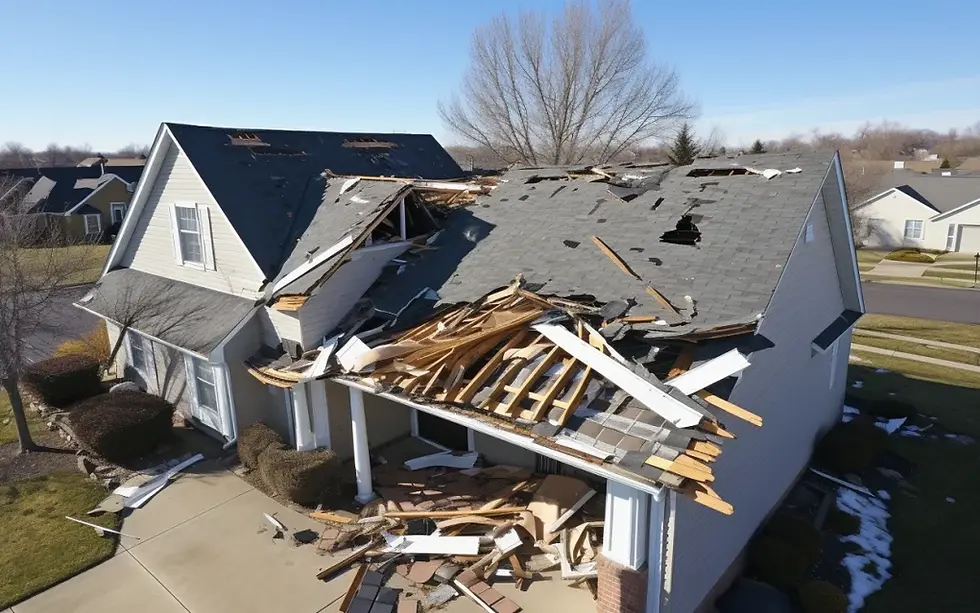
Connecticut homeowners had a rough 2026. Summer thunderstorms brought wind and hail. Flash flooding hit parts of southern Connecticut. A strong coastal storm in late September added more roof, siding, water, and tree-damage claims to an already busy year.
At the same time, state lawmakers and insurance regulators were active. One new law strengthened the safety net for policyholders if an insurer fails. Another major property-claims bill did not pass, but it showed where the debate may be heading.
Here is what changed, what almost changed, and what it means if you are dealing with a property claim in Connecticut.

2026 brought several different kinds of property damage
One reason Connecticut property claims in 2026 felt complicated is that the damage did not come from one single type of event.
Wind, hail, floodwater, roof leaks, fallen trees, and coastal storm damage can all raise different coverage questions. A claim that seems simple at first can turn into a dispute over cause, timing, maintenance, exclusions, or the amount needed to repair the damage properly.
A few examples show why the details matter.
Wind and hail claims often turn on physical evidence
Thunderstorm and hail claims usually involve roofs, siding, gutters, windows, fences, sheds, and detached structures. The main questions are often:
Did the storm cause direct physical damage?
Was the damaged material already worn, brittle, or deteriorated?
Can the damaged portion be repaired, or does it need replacement?
Does the policy pay replacement cost or actual cash value?
Are matching issues involved when only part of a roof or siding elevation is damaged?
Good photographs help. So do contractor estimates that describe the damage clearly instead of using generic language.
A strong claim file does not just say, “roof damaged by storm.” It shows where the damage is, what caused it, when it happened, and what work is needed to restore the property.
Flooding is often treated differently from stormwater damage
Flash flooding in southern Connecticut created another problem. Many homeowners assume that if water entered during a storm, the homeowners policy should respond.
That is not always true.
Standard homeowners policies often exclude flood, surface water, and water that enters from outside at ground level. Flood coverage is usually purchased separately, often through the National Flood Insurance Program or a private flood policy.
By contrast, water damage from a covered opening, such as wind damage that allows rain to enter, may be treated differently. The facts matter. The path of the water matters. The wording of the policy matters.
If water damage is involved, preserve evidence quickly. Take photographs before cleanup when it is safe to do so. Save damaged materials when possible. Keep receipts for mitigation, drying, temporary repairs, and emergency services.
Coastal storms can create mixed-cause claims
The late September coastal storm created the kind of claim that can be difficult to sort out. A single property may have wind damage, wind-driven rain, basement water, fallen tree damage, power interruption, and damage to exterior structures.
That raises a key issue: one storm can produce both covered and excluded causes of loss.
For example, wind damage to a roof may be covered, while floodwater entering at ground level may be excluded under the homeowners policy unless separate flood coverage exists. If both happened at the same property, the claim needs careful documentation.
This is where many disputes begin. The carrier may focus on excluded water. The homeowner may focus on wind damage. The right answer may depend on the sequence of events, the physical evidence, and the precise policy language.
Public Act 26-69 strengthened the safety net if an insurer fails
The most concrete property-insurance change in 2026 came from Public Act 26-69, the Insurance Department’s annual cleanup bill.
For homeowners, the biggest change involved the Connecticut Insurance Guaranty Association. This association acts as a backstop when a licensed insurer becomes insolvent and cannot pay covered claims.
Effective October 1, 2026, the act increased first-party real property coverage under the Connecticut Insurance Guaranty Association to up to $1 million. It also raised the unearned premium maximum to $50,000 per policy and removed the prior $100 minimum for covered claims.
That is a meaningful change.
If an insurer fails while a homeowner has an open property claim, the homeowner may face delay, confusion, and financial pressure. A stronger guaranty association limit does not make the process easy, but it can provide a larger safety net than the prior structure.
What first-party real property coverage means
“First-party” generally means a claim made by the insured under the insured’s own policy. For homeowners, that usually means damage to the home, other structures, or covered property, depending on the policy.
“Real property” generally refers to the building and land-related structures, not personal belongings. In a homeowners claim, the distinction between real property and personal property can matter because different limits, valuation rules, and coverage provisions may apply.
The new guaranty association limit does not mean every claim is automatically paid up to $1 million. Coverage still depends on the policy, the facts of the loss, and the guaranty association rules. But the higher cap matters when a covered home damage claim is large.
Why the unearned premium change matters
Unearned premium is the portion of a paid premium that applies to future coverage the insurer has not yet provided. If a carrier becomes insolvent, policyholders may be owed unearned premium.
Raising the unearned premium maximum to $50,000 per policy is especially relevant for larger personal lines policies and other policies with significant premium amounts. Most homeowners will not have unearned premium anywhere near that figure, but the higher cap provides more protection where the premium is substantial.
Removing the $100 minimum helps smaller claims too
The removal of the $100 minimum for covered claims may sound minor, but it reflects a practical point. Smaller claims still matter to policyholders. If the guaranty system applies, eligible claims should not be blocked simply because they fall below a small-dollar threshold.
The same act points toward better adjuster training
Public Act 26-69 also allows the insurance commissioner to adopt regulations setting continuing education requirements for casualty claims adjusters.
That may not sound dramatic, but it matters.
Claims handling depends heavily on adjuster judgment. Adjusters review policy language, inspect damage, evaluate estimates, communicate coverage positions, and help decide what gets paid. Better training can reduce errors and improve consistency.
For policyholders, the hope is simple: more knowledgeable adjusters should lead to better claim decisions.
That does not mean every disagreement disappears. It does mean Connecticut has moved toward a system where adjusters may face clearer education expectations over time.

Premium increase explanations arrive in 2027
Another useful change starts next year.
Effective January 1, 2027, premium billing notices for personal risk policies must state that the insurer will provide a reasonable explanation of a premium increase within 20 days after receiving a written request.
This does not prevent premium increases. It does give policyholders a clearer way to ask why a bill went up.
A reasonable explanation might involve factors such as:
A rate change approved for a class of policies
Changes in coverage limits
A prior claim
Updated property characteristics
Inflation in repair costs
Changes in deductible, endorsements, or discounts
The key is that the request must be in writing. Homeowners should keep a copy of the request and proof of when it was sent.
This change may be especially helpful in a market where many homeowners are seeing higher premiums, stricter underwriting, and more questions about roofs, trees, water losses, and coastal exposure.
HB 5263 did not pass, but homeowners should understand it
The biggest property-claims bill of the 2026 session was HB 5263. It did not become law, but it is still worth paying attention to because it addressed several issues that often come up after storm damage.
The bill would have changed how certain claims and repair arrangements work in Connecticut. Its focus included assignment of benefits, contractor conduct, and claim-handling rules.
Because it did not pass, homeowners should not treat it as current law. Still, the bill is a useful signal. It shows the kinds of problems lawmakers are hearing about.
Assignment of benefits would have faced tighter rules
An assignment of benefits, often called an AOB, lets a homeowner transfer insurance claim benefits to another party, usually a contractor.
In practice, that can mean the contractor deals directly with the insurance company and seeks payment under the policy for the repair work. Sometimes this arrangement is useful. Sometimes it creates confusion or conflict.
HB 5263 would have required an assignment of benefits agreement to be in writing. It also would have limited the assignment to the repair work the contractor agreed to perform. The agreement would have needed a cancellation right and a required warning notice.
Those proposed safeguards address a real-world issue. After a storm, homeowners may be under stress. A contractor may ask for signatures quickly. The homeowner may not realize that signing an AOB can affect control over the claim, payment, disputes, and repair decisions.
Even though the bill did not pass, the practical lesson remains:
Do not sign an assignment of benefits unless you understand exactly what rights you are giving up and what work the contractor is obligated to perform.
Contractor involvement in claims remains a sensitive area
The prompt for HB 5263 also points to concern about contractors acting in ways that resemble claim adjusters. This is a recurring issue in property claims.
Contractors can inspect damage, explain repair methods, and provide estimates. That is part of their work. But insurance adjusting is different. Adjusting involves interpreting policy coverage, negotiating claim payments, and representing an insured in a claim.
Homeowners should understand the difference.
A contractor may be very skilled at roofing, siding, mitigation, or rebuilding. That does not automatically mean the contractor is qualified or authorized to advise on insurance coverage or negotiate a disputed claim.
When a claim becomes complicated, it may be better to get help from a properly licensed professional who understands policy language, estimating, documentation, and claim presentation.
What homeowners should do after a 2026-style storm loss
The best time to prepare a claim is before the dispute begins. After a storm, the first few days often shape the entire file.
Protect the property from further damage
Most policies require the insured to take reasonable steps to protect the property after a loss. That may include tarping a roof, boarding a broken window, drying wet areas, or removing a fallen tree from a structure.
Keep receipts. Photograph the condition before and after temporary repairs. Do not make permanent repairs before the insurer has a reasonable chance to inspect, unless waiting would make the damage worse or create a safety problem.
Report the claim promptly
Late notice can create coverage problems. If there is visible damage, report it within the time required by the policy. Provide the date of loss as accurately as possible.
If damage is discovered later, explain when and how it was found. For example, hail damage may not be obvious from the ground, while water stains may appear after the storm has passed.
Document more than the obvious damage
Photograph all affected areas, not just the worst spot. For exterior claims, take wide shots and close-ups. For interior claims, photograph ceilings, walls, floors, contents, and any visible water path.
Create a simple claim folder with:
The policy and declarations page
Photos and videos
Contractor estimates
Receipts and invoices
Emails and letters from the insurer
Notes from phone calls
Dates of inspections
Copies of any forms signed
A clean file helps if the claim is reassigned, delayed, denied, or underpaid.
Read the policy before relying on assumptions
Property policies are not all the same. Deductibles can vary. Wind or hurricane deductibles may apply in some policies. Roof coverage may be limited by age, condition, endorsement, or valuation terms. Water exclusions can be broad.
Do not rely only on what a neighbor’s insurer paid. Two homes on the same street can have different policies and different facts.
Be careful with quick settlement pressure
Some claims are straightforward and settle quickly. That is a good thing when the payment is accurate.
But fast payment is not always full payment. Before accepting a settlement as final, compare the estimate to the actual scope of damage. Look for missing items such as code-related work, interior repairs, detached structures, overhead and profit where appropriate, permit costs, debris removal, or matching issues.
If the insurer’s estimate is unclear, ask for a written explanation.
What this means for homeowners going into 2027
The 2026 storm season showed how vulnerable Connecticut homes can be to several kinds of damage in the same year. It also showed that property insurance rules are still changing.
The passed law gives homeowners a stronger safety net if a carrier becomes insolvent. It opens the door to continuing education rules for casualty claims adjusters. It also creates a clearer right to ask for a written explanation of a premium increase beginning in 2027.
The bill that did not pass, HB 5263, still matters because it focused on common claim pressure points: assignment of benefits, contractor involvement, and consumer protection after property damage.
The practical takeaway is simple. After a loss, slow the process down enough to protect yourself. Photograph the damage. Read the policy. Keep records. Ask questions in writing. Be cautious before signing over claim benefits. And when the claim involves serious damage, disputed coverage, or a large repair estimate, get qualified help before the file goes too far off track.
This article is for general informational purposes only and is not legal advice. For advice about a specific claim, policy, or dispute, consult a qualified insurance or legal professional.


Comments