
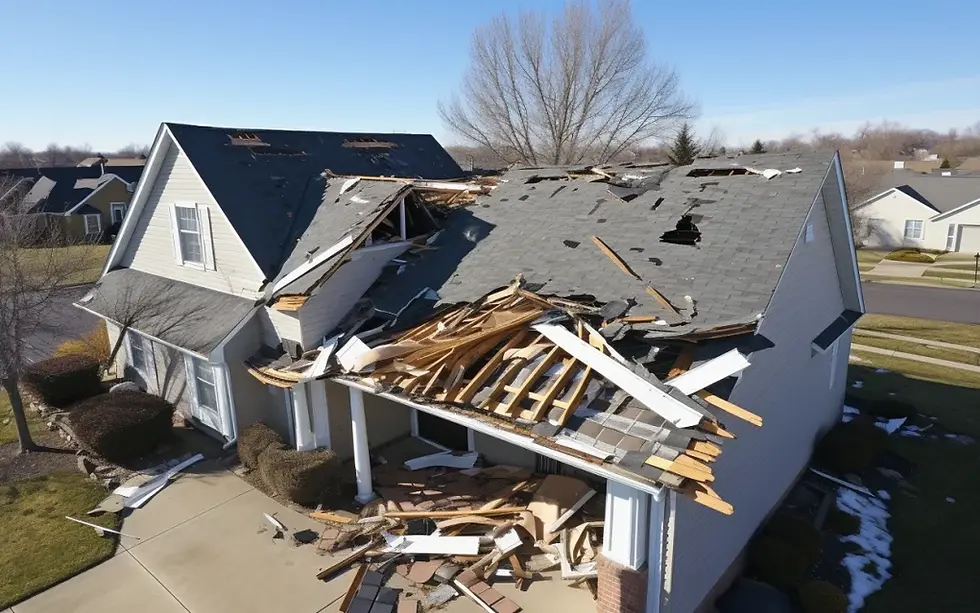


MA FAIR Plan Explained: Who Needs It, What It Covers, and How to File a Claim
When a standard insurance company says no, a Massachusetts homeowner still may need coverage to close on a mortgage, protect a property, or satisfy a condo association. That is where the MA FAIR Plan often enters the picture.
The FAIR Plan is not a discount program. It is not a special policy for one type of homeowner. It is a property insurance option for people who cannot get coverage through the regular insurance market, often because the home, its location, or its claim history makes insurers uncomfortable.
For many households, it is the backup door after the front door closes.
This guide explains who typically ends up on the plan, how its coverage compares with a standard homeowners policy, and what to do if a claim happens. Insurance policy terms can vary, so treat this as general information and review the actual policy with a licensed Massachusetts insurance agent or attorney when needed.

The MA FAIR Plan is insurance for properties that struggle to get standard coverage
The Massachusetts FAIR Plan is formally connected with the Massachusetts Property Insurance Underwriting Association, often called MPIUA. It exists to provide access to basic property insurance when coverage is not available in the voluntary market.
That phrase, “voluntary market,” means the standard insurance companies that choose which homes they want to insure. If those companies decline a home, nonrenew a policy, or offer coverage only with restrictions the owner cannot accept, the FAIR Plan may become the practical option.
A home might be pushed toward the FAIR Plan for several reasons:
Coastal exposure
Homes near the ocean can be harder to insure because wind, storms, and weather exposure raise concern for carriers.
Older construction
A home with aging electrical, plumbing, heating, or roof systems may not fit standard underwriting guidelines.
Prior claims
Repeated water, fire, theft, or liability claims can make carriers less willing to offer a standard policy.
Vacancy or unusual occupancy
A vacant, seasonal, partially rented, or otherwise unusual property may not qualify for ordinary homeowners coverage.
Condition issues
Peeling paint, damaged steps, an old roof, missing railings, or other visible hazards can trigger a denial.
Limited insurance history
Some owners have trouble when a property has lapsed coverage or when there is not enough recent insurance history for underwriters.
This does not mean every FAIR Plan property is unsafe or poorly maintained. Many are ordinary homes that happen to sit in harder-to-insure areas. In Massachusetts, coastal location alone can make the insurance search more complicated.
Who ends up on the FAIR Plan
The FAIR Plan usually becomes part of the conversation when a property owner has already tried the standard market and could not secure coverage on acceptable terms.
That can include:
A first-time buyer purchasing a home near the coast
A landlord insuring a small rental property
A homeowner whose insurer decided not to renew
An owner of an older home that needs repairs
A family settling an estate with a vacant house
A condo unit owner or association dealing with underwriting problems
A property owner fixing issues before applying again to the standard market
Mortgage lenders often require proof of insurance before closing. If standard carriers decline to write the policy, the FAIR Plan may be the only available way to meet that requirement on time.
Still, it is usually best viewed as a safety net, not the first choice. Standard homeowners policies often provide broader coverage, more options, and smoother pricing competition. The FAIR Plan can be a necessary bridge while the owner repairs, updates, or improves the property’s insurance profile.
How FAIR Plan coverage differs from a standard homeowners policy
A standard homeowners policy, often an HO-3 form, usually gives broad protection for the home itself. It often covers the dwelling against many causes of direct physical loss unless the policy excludes them. Personal property is commonly covered on a named-peril basis, meaning only listed causes of loss apply.
FAIR Plan coverage is often more limited and more tightly defined. The exact policy form matters, but the main difference is simple: standard homeowners insurance tends to be broader, while FAIR Plan coverage tends to be more basic.
Here is a practical comparison.
Coverage area | Standard homeowners policy | MA FAIR Plan policy |
Dwelling coverage | Often broad, subject to exclusions | Often more limited and tied closely to listed causes of loss |
Personal property | Usually included, with limits and exclusions | May be available, but terms and limits need careful review |
Loss of use | Often included if a covered loss makes the home unlivable | May be available depending on policy form |
Personal liability | Commonly included in homeowners policies | May not match standard policy terms, or may need separate attention |
Water damage | Some sudden and accidental water losses may be covered | Coverage can be narrower, with important exclusions |
Flood | Usually excluded | Usually excluded and requires separate flood insurance |
Endorsements | Many optional add-ons may be available | Fewer options may be available |
Underwriting flexibility | Carrier chooses whether to accept the property | Designed for properties that cannot find voluntary coverage |
The biggest mistake is assuming the FAIR Plan is just a standard homeowners policy from a different company. It may not be.
Named perils matter more than many homeowners expect
Many FAIR Plan policies work around named perils. A named peril is a specific cause of loss listed in the policy. If the cause is not listed, it may not be covered.
Common named perils in basic property policies can include things like fire, lightning, explosion, smoke, windstorm, hail, vandalism, theft, or vehicle damage. The exact list depends on the policy.
That difference can matter after a loss.
A standard policy might cover a wider range of accidental damage to the structure, unless excluded. A more limited policy might ask a narrower question: Did the damage result from one of the covered causes listed in the contract?
If the answer is no, the claim may be denied even if the damage was sudden, expensive, and real.
Water damage needs special attention
Water is one of the most misunderstood parts of home insurance.
Most homeowners policies do not cover flood damage. That usually means rising surface water, storm surge, overflowing bodies of water, or water entering from outside at ground level. Flood insurance is separate.
FAIR Plan policies also generally exclude flood. If a property has coastal or low-lying exposure, separate flood coverage may be critical.
Other water losses can be complicated too. A burst pipe, roof leak, sewer backup, seepage, and long-term moisture problem can all be treated differently. Coverage often turns on the source of the water, how suddenly it happened, whether maintenance played a role, and what the policy says.
Do not rely on a general statement like “water damage is covered.” Read the policy language.
Liability coverage may not be the same
Personal liability coverage protects against certain claims that someone was injured or their property was damaged because of the policyholder’s negligence. In a standard homeowners policy, liability protection is one of the major benefits.
With a FAIR Plan policy, liability deserves a close look. Some property policies focus mainly on the building and contents. Others may offer liability in a homeowners package or through an endorsement. The only safe approach is to confirm what the declarations page and coverage forms actually include.
If liability is missing or limited, ask an agent whether separate personal liability coverage, an umbrella policy, or another companion policy is available.
What to check before accepting a FAIR Plan policy
A FAIR Plan policy can solve an urgent problem, but it should not be accepted blindly. Before binding coverage, review the details that decide what happens after a claim.
Focus on these items:
Coverage form
Confirm whether the policy is homeowners, dwelling fire, tenant, condo, or another form.
Covered perils
Look for the list of causes of loss the policy covers.
Dwelling limit
Make sure the building limit reflects realistic rebuilding costs, not just market value or loan balance.
Personal property limit
Check whether contents are covered and whether special limits apply to items like jewelry, tools, artwork, or electronics.
Deductibles
Review the standard deductible and any separate wind, hail, hurricane, or other special deductible.
Loss settlement
Confirm whether the policy pays replacement cost or actual cash value. Actual cash value usually factors in depreciation.
Loss of use
See whether the policy pays for temporary housing if a covered loss makes the home unlivable.
Exclusions
Pay special attention to flood, wear and tear, neglect, mold, earth movement, sewer backup, and ordinance or law issues.
Required repairs
Some policies may require certain repairs or inspections. Missing those requirements can create problems later.
The declarations page gives a quick summary, but it does not explain everything. The policy forms and endorsements control the details.

How to handle a claim with the MA FAIR Plan
A claim under the FAIR Plan should be handled carefully from the first hour. The process is similar to other property insurance claims, but limited coverage makes documentation even more important.
Protect the property from more damage
After a loss, take reasonable steps to prevent additional damage if it is safe to do so.
That might mean:
Covering a broken window
Placing a tarp over a damaged roof
Shutting off water after a pipe leak
Moving undamaged belongings away from moisture
Calling emergency services after a fire or safety hazard
Keep receipts for emergency repairs. Insurers often expect property owners to reduce further damage, but they also need proof of what was done and why.
Do not make permanent repairs before the damage is documented unless safety requires it. If emergency work is needed, take photos first.
Report the claim promptly
Notify the FAIR Plan or the insurance agent as soon as possible. The policy may have duties after a loss, including prompt notice.
When reporting, give clear basic facts:
Policy number
Property address
Date and approximate time of loss
Cause of damage, if known
Areas of the property affected
Whether the home is safe to occupy
Emergency steps already taken
Contact information for contractors or emergency crews
Avoid guessing. If the cause is not yet known, say that. A plumber, roofer, fire department, or adjuster may later identify the source.
Document everything before cleanup moves too far
Photos and videos can make or break a property claim. Take wide shots of each damaged room or exterior area, then close-up images of specific damage.
Good documentation includes:
Damaged walls, ceilings, floors, roofs, siding, and windows
Personal property that was damaged or destroyed
The source of the damage, such as a pipe, appliance, tree limb, or burn area
Water lines, stains, debris, smoke marks, or impact points
Temporary repairs
Contractor invoices and receipts
Communication with the insurer or adjuster
Create a simple claim folder. Save estimates, receipts, emails, texts, photos, and notes from phone calls. Include the date, person spoken to, and what was discussed.
Make a personal property inventory
If belongings were damaged, list them as soon as possible. Memory fades quickly after a stressful event.
For each item, try to include:
Item name
Brand or model, if known
Approximate age
Purchase price or estimated value
Photos, receipts, manuals, or credit card records, if available
Do not throw away damaged items until the adjuster has had a chance to inspect them, unless they create a health or safety problem. If disposal is necessary, photograph the items first.
Meet the adjuster and ask direct questions
An adjuster will usually inspect the damage and evaluate whether the loss is covered. Be ready to walk through the property and explain what happened.
Good questions include:
What cause of loss are you evaluating?
Which policy section applies?
Is any part of the damage excluded?
Do you need more documents from me?
Should I get contractor estimates?
How will depreciation apply?
Will any payment be issued now?
What is the next deadline?
Keep the tone practical. The goal is to create a clear record and understand the claim path.
Review the coverage decision carefully
After inspection, the insurer may accept the claim, deny it, or cover only part of it.
If the claim is approved, compare the estimate with the actual scope of damage. Insurance estimates sometimes miss hidden damage, code-related work, or price changes. Contractors may also find more damage once repairs begin.
If the claim is denied or partially denied, ask for the reason in writing. The explanation should connect the facts of the loss to the policy language.
A denial does not always mean the discussion is over. Sometimes the issue is missing documentation, an unclear cause of loss, or a disagreement over the repair scope.
Get help when the claim is complex
Some claims are simple. A small wind-damaged section of siding or a minor kitchen fire may move along with basic documentation.
Other claims need help. Consider asking for professional guidance if:
The home is unsafe to occupy
The claim involves fire, major water damage, or structural damage
The cause of loss is disputed
The insurer denies coverage
The repair estimate seems too low
The policy language is confusing
Multiple policies may apply, such as flood and homeowners coverage
A licensed public adjuster, insurance attorney, contractor, or experienced agent may help, depending on the problem. Be sure to understand fees and responsibilities before hiring anyone.
How to move from the FAIR Plan back to standard insurance
Many property owners do not want to stay on the FAIR Plan forever. The best path back to the standard market is usually to reduce the issues that made the property hard to insure.
That can include:
Replacing an old roof
Updating electrical, plumbing, or heating systems
Repairing steps, railings, porches, and walkways
Removing debris or unsafe structures
Installing smoke detectors and carbon monoxide detectors
Improving storm protection where practical
Resolving open claims
Keeping continuous coverage
Providing photos or inspection reports to agents
Ask an independent insurance agent what specific changes would make the property more attractive to standard carriers. A general improvement plan helps, but underwriting often turns on concrete details.
For example, “the roof is older” is vague. “The roof was replaced last year, and here is the invoice” is useful.
The key takeaway
The MA FAIR Plan exists because some Massachusetts properties cannot get standard homeowners coverage when they need it. It can be a valuable safety net, especially for coastal homes, older properties, vacant homes, and houses with claim or condition issues.
The tradeoff is coverage. A FAIR Plan policy may be more limited than a standard homeowners policy, with tighter covered perils, fewer add-ons, and important exclusions. The details matter most when a claim happens.
Before a loss, read the declarations page and policy forms. After a loss, act quickly, document carefully, protect the property, and ask clear questions about coverage. The better the record, the easier it is to understand what the policy owes and what steps come next.
Brought to you by Alfred Smith CPCU Claims Services LLC


Comments