
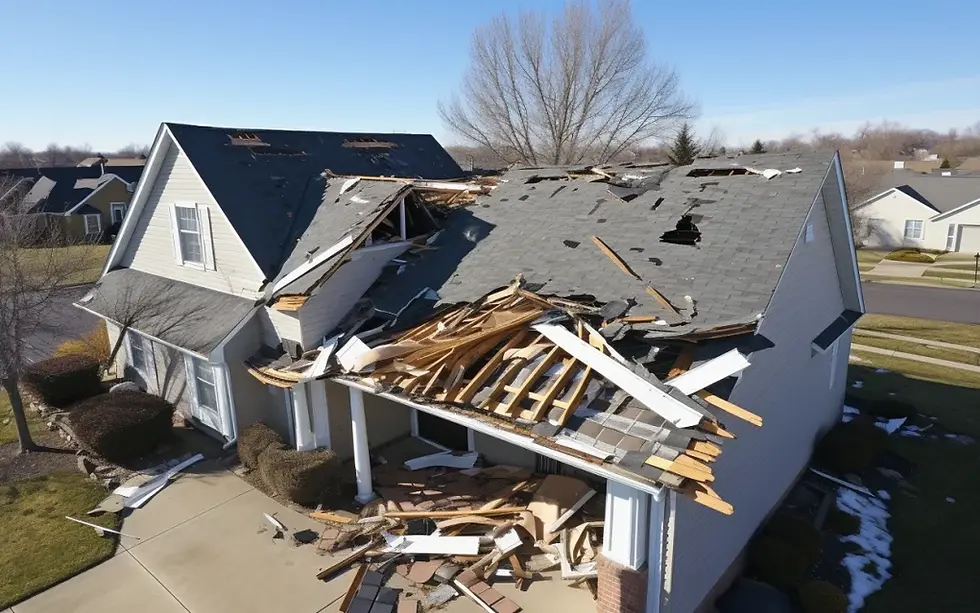


Should I File an Insurance Claim or Pay Out of Pocket
A small leak can create a big question: is this worth reporting to insurance, or is it smarter to pay for repairs yourself?
The answer is not always “file the claim.” It is also not always “avoid claims at all costs.” A public adjuster looks at the damage, the policy, the deductible, and the likely long-term effect before making that call.
This guide explains how to think through the decision with practical examples. It is general information, not legal, financial, or insurance advice. Your policy language and state rules control your specific situation.

Start with the size of the loss
The first question is simple: how much will the covered repair likely cost after the deductible?
If the repair cost is lower than your deductible, filing usually will not lead to a payment. For example, if your deductible is $2,500 and the repair estimate is $1,400, the insurer has nothing to pay unless hidden damage pushes the total higher.
The harder cases sit just above the deductible.
Say a windstorm damages a few shingles, and a roofer estimates $3,200 in repairs. If the deductible is $2,500, the most you might receive is around $700, before any depreciation or policy limits. In that case, the claim payment may not be worth the claim record, time, and inspection process.
By contrast, if a kitchen supply line fails and causes cabinet, flooring, and wall damage, the visible repair might look like $4,000 at first. Once demolition begins, the total can grow because water travels under flooring and behind baseboards. That type of loss may justify a claim, especially if licensed mitigation, drying, and rebuild work are needed.
A good rule of thumb is this: do not rely on the first visual impression. Get photos, moisture readings when water is involved, and at least one written estimate before deciding.
Think about your deductible and your claim history
A deductible is the part of a covered loss you pay. The National Association of Insurance Commissioners explains deductibles as a key part of how property insurance works, and they can vary by policy and cause of loss. Some policies have special deductibles for wind, hail, hurricanes, or named storms.
That matters because the “out of pocket” number may be larger than expected.
For example:
Damage situation | Deductible issue to check | Why it matters |
Hail damage to a roof | Wind or hail deductible | It may be different from the standard deductible |
Hurricane-related damage | Percentage deductible | The deductible may be based on dwelling limits |
Water damage inside the home | Standard deductible | Hidden damage can change the claim value |
Minor fence damage | Coverage limits or exclusions | Some outdoor property has limited coverage |
Claim history also matters. Insurers commonly review prior losses when underwriting or renewing policies. Consumer reporting databases, such as C.L.U.E. property reports, can include insurance claim history. That does not mean one claim will automatically raise a premium or cause nonrenewal. State laws, claim type, insurer rules, and your overall risk profile all play a role.
Still, if the expected payment is small, it is fair to ask whether the claim is worth having on your record.

Check whether the damage is sudden or maintenance related
Insurance is generally designed for sudden and accidental losses, not routine wear, neglect, or long-term maintenance problems. The Insurance Information Institute describes homeowners insurance as protection for covered perils, but policies also contain exclusions and conditions.
That distinction can decide whether filing makes sense.
A pipe that suddenly bursts behind a wall may be covered, depending on the policy. A slow leak that has been dripping for months may be denied if the insurer finds long-term seepage, deterioration, or failure to maintain the property.
Common claim-worthy events may include:
Sudden pipe breaks
Wind or hail damage
Fire and smoke damage
Theft or vandalism
Sudden appliance overflow
Common out-of-pocket candidates may include:
Old caulking around a tub
Gradual roof wear
Rot from long-term moisture
Cosmetic damage below the deductible
Small repairs with no hidden damage risk
This is where documentation matters. Take clear photos before cleanup, save damaged materials if safe, and keep invoices for emergency repairs. Most policies require the policyholder to protect the property from further damage after a loss. That means stopping the water, covering a roof opening, or arranging temporary mitigation when needed.
Consider the risk of opening a claim too early
Calling an agent to ask a general question is different from formally opening a claim, but the line can vary by company and process. Before reporting, ask whether the conversation will create a claim file.
This matters most when the facts are unclear. If a claim is opened and later closed without payment, it may still appear as a reported loss in some systems. That can be frustrating if the final repair was small or excluded.
A public adjuster would usually want these questions answered first:
What caused the damage?
The cause affects coverage.
When did it happen?
Policies often require prompt notice.
What is the likely repair range?
Compare this to the deductible.
Is there hidden damage?
Water, smoke, and structural damage can spread beyond what is visible.
Are there policy limits or exclusions?
Read the declarations page and relevant policy sections.
If the damage is serious, do not delay just to avoid a claim. Late reporting can create its own problems, especially if the delay allows damage to worsen.

Know when paying out of pocket makes sense
Paying out of pocket can be the better choice when the repair is clearly minor, the cause is not covered, or the claim value is too close to the deductible.
It often makes sense when:
The repair is safely below the deductible
The damage is cosmetic only
The issue is clearly maintenance related
There is no sign of hidden damage
The expected insurance payment would be small
Filing tends to make more sense when:
The damage is well above the deductible
The cause appears sudden and covered
Professional mitigation is needed
The structure, roof, electrical, or plumbing systems are affected
Temporary housing or major repairs may be involved
For example, a $600 drywall patch after a small plumbing repair may be better paid directly. A $35,000 fire and smoke loss should almost always be reported because cleanup, code issues, contents, and additional living expense coverage may all come into play.
The middle ground is where most mistakes happen. A $5,000 water loss with a $2,500 deductible may look small, but if cabinets, subflooring, and mold prevention work are involved, the true cost could be much higher.

The takeaway
Before you decide, slow the process down long enough to gather facts. Confirm the deductible, document the damage, get a repair estimate, and read the policy sections tied to the cause of loss.
If the damage is minor and the likely payment is small, paying out of pocket may protect you from unnecessary claim activity. If the damage is significant, sudden, and potentially covered, filing a claim can be the right move.
The best decision is not based on fear of premiums or hope for a payout. It is based on the numbers, the cause of loss, and the policy.


Comments