.jpg)



The Matching Problem: Why Your Insurer Won't Replace Your Whole Roof (And Why They Might Have To)

What "uniformity and matching" really means, and what your policy doesn't tell you about partial roof and siding repairs
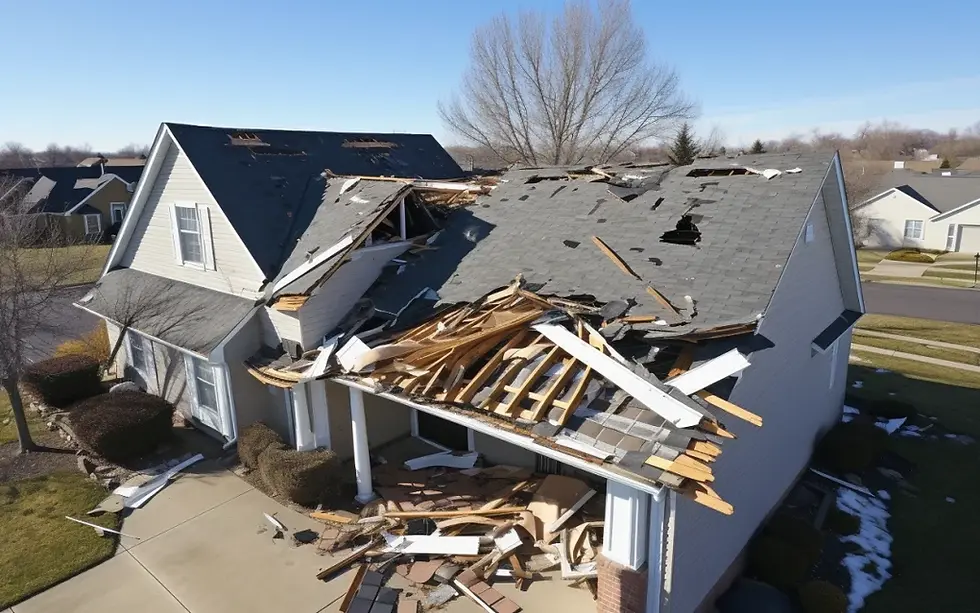
You filed a claim after a storm damaged one slope of your roof — or maybe hail dented siding on just the north side of your house. Your insurance company sends an adjuster, agrees there's damage, and offers to pay for... just that section.
Sounds reasonable, until you get quotes from actual roofers and siding contractors. They tell you something the insurance company didn't: your existing shingles or siding are no longer available, or the new materials won't match the old ones in color, texture, or wear. Now you're facing a roof or exterior that looks patched — a visibly mismatched eyesore — because your insurer only wants to pay for the damaged section, not the whole thing.
This is what's known in the industry as the matching problem, and it's one of the most common — and most contested — disputes in property insurance claims.
What "Matching" Actually Means
Most homeowners insurance policies include language requiring that repairs restore your property to its pre-loss condition — not just structurally, but aesthetically. This is often referred to as the uniformity requirement or matching provision.
In practice, this means: if your insurer can't reasonably match new materials to your existing undamaged roof or siding, simply paying to patch the damaged section doesn't actually restore your home to its pre-loss condition. It leaves you with a visibly inconsistent, mismatched result — different colors, different shading, different wear patterns, sometimes even different material batches that don't align correctly.

When Full Replacement Is Owed
Whether your insurer owes for a full roof or siding replacement — not just the damaged section — generally comes down to a few factors:
Is a reasonable match available? If your shingles or siding have been discontinued, faded from years of sun exposure, or are simply no longer manufactured, a true match often isn't possible.
What does your specific policy say? Many policies include explicit matching language; others are silent, which can still leave room for a match-based argument under the general "restore to pre-loss condition" standard.
What does state law or regulatory guidance say? Massachusetts, Rhode Island, and Connecticut — like many states — have seen regulatory bulletins, case law, or Department of Insurance guidance addressing matching disputes, particularly for roofing claims. This is an evolving and often locally-specific area, which is part of why claims like these benefit from someone who knows the regional landscape.
Is the mismatch reasonably visible? A slight variation tucked away on a back slope is treated differently than an obvious clash on a street-facing elevation.
When these factors line up, insurers can be obligated to pay for a full roof or full elevation of siding — not just the section that was directly damaged.

Why Carriers Resist
It's rarely subtle: the cost difference between "patch one slope" and "replace the whole roof" can run into the thousands of dollars, and insurance companies are financially motivated to minimize payouts. A few common tactics show up repeatedly in these disputes:
Downplaying how visible or significant the mismatch actually is
Claiming a "close enough" match exists, when it doesn't hold up on inspection
Citing generic policy language without addressing the specific matching provision
Offering a cash settlement for the damaged section only, hoping the homeowner won't push back
Most homeowners don't know matching is even a negotiable issue — so when the insurer's first offer covers only the damaged section, they assume that's simply what they're owed. It often isn't.
How to Protect Yourself
Document everything — photos of the full roof or elevation, not just the damaged area, showing the age, wear, and appearance of undamaged sections.
Get contractor input early — a roofing or siding contractor can often confirm in writing whether a true match is available.
Read your policy's matching language carefully — or have someone who understands claims language review it for you.
Don't accept the first offer at face value — a partial-repair estimate is a starting point for negotiation, not necessarily the final word.
Where a Public Adjuster Comes In
This is exactly the kind of dispute a public adjuster is built to handle — documenting the mismatch, citing the applicable policy language and regulatory guidance, and pushing back on a lowball partial-repair offer with the technical and regulatory grounding to back it up.
If your insurance company is only offering to patch part of your roof or siding, it's worth a second opinion before you accept.

Facing a matching dispute on your claim? Call 617-697-2646 or email alfredsmithcpcu@gmail.com to talk through your situation.
Alfred Smith, CPCU, AIC, AIM, ARM, Haag Certified Inspector — Licensed Public Adjuster in Massachusetts, Rhode Island, and Connecticut


Comments