



When Your Roof Can't Be Matched: Fighting a Partial Denial in Connecticut
From my current caseload. Client and carrier details are left out because the claim is still open.
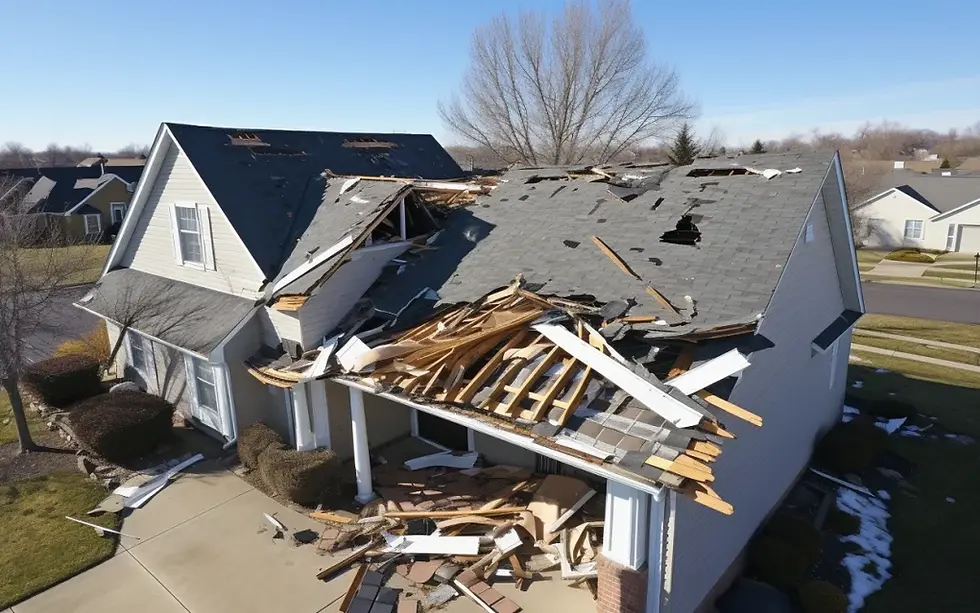
The insurance company agreed the storm damaged the roof. It agreed to pay for a repair. The problem is that the repair can't be done.
A Connecticut homeowner I represent had a summer 2025 wind and hail loss. The carrier accepted the damage and approved a slope repair. But the shingle on that roof is discontinued, and an independent lab found no product on the market that matches it. You can't patch a roof with a shingle that doesn't exist.
That's the claim I'm working right now, and it's a good example of how a "yes" from your insurer can still leave you without a fixed roof.

The carrier's position: "it didn't match before the storm"
The carrier issued a partial denial on full roof replacement. Its reasoning: some ridge cap shingles already looked different in color before the storm. Since the roof "didn't match" before the loss, the carrier says it owes no matching now.
It's a creative argument. It's also one I see more and more, so homeowners should understand where it falls short.
It answers the wrong question. Matching isn't about whether a roof looked perfect before the storm. It's about whether the repair can restore the roof with like kind and quality materials.
Weathering isn't a different roof. Ridge caps get more sun and wind than the field. Some color variation over years of exposure is normal. It doesn't mean the roof was two different systems.
The lab result still stands. Whatever the ridge looks like, no matching replacement shingle is available for the slopes the carrier agreed to repair.

What Connecticut's matching law says
Connecticut has a matching statute, CGS § 38a-316e. When a covered loss requires replacing part of your home and the new material won't reasonably match the old, the insurer has to go further. It must replace enough of the surrounding items to produce a reasonably uniform appearance.
What the statute doesn't contain is a "pre-loss mismatch" exception. Nothing in it lets a carrier skip matching because part of the roof had weathered differently before the storm. If an insurer wants to rely on an exception, it should be able to point to the language. In my file, I've asked for exactly that, in writing.
The statute also keeps the policy's dispute provisions intact. That matters, because it means a disagreement over the scope of repair can still go to appraisal.
Why a patch on a discontinued shingle doesn't work
When a carrier chooses repair over replacement, it should be able to show the repair can actually be done. On this roof, that means answering three questions:
What product will be installed on the damaged slopes?
What manufacturer instructions allow that product to be tied into a discontinued shingle?
What licensed contractor will install it and stand behind the work?
If those answers don't exist, the "repair" exists only on paper. A roofer can't warrant it, and the homeowner ends up with a mismatched roof the policy was supposed to prevent. Replacement becomes the only repair that meets the like kind and quality standard.
Where the claim stands
We've completed a joint reinspection, and I've sent the carrier a written demand. It gives the carrier a simple choice: agree to the full scope in writing, or go to appraisal under the policy.
If neither happens, the homeowner has other options:
A complaint to the Connecticut Insurance Department under the unfair claim settlement practices statute, CGS § 38a-816(6).
A referral to coverage counsel to evaluate contract and extra-contractual claims.
None of that is what my client wants. She wants her roof replaced and the claim closed. That outcome is available now, and I'll post an update when this one resolves.
What homeowners should take from this
An approved repair isn't the end of the conversation. Ask whether the materials to do it actually exist.
Get a lab match report. An independent shingle analysis can show whether your product is discontinued and whether anything matches it. Submit a complete shingle, not a fragment.
Ask for the basis in writing. If your carrier cites a pre-loss condition, ask which policy provision or statute supports it.
Know your deadlines. Policies limit how long you have to sue, often measured from the date of loss. Don't let negotiations run past it.
Remember appraisal. If you and the carrier disagree on the amount or scope of loss, appraisal may resolve it without a lawsuit.
If your insurer has approved a repair your contractor says can't be done, I'm happy to take a look.
Alfred Smith, CPCU, AIC, AIM, ARM Licensed Public Adjuster (MA, RI, CT) | Alfred Smith CPCU Claims Services LLC (617) 697-2646 | alfredsmithcpcu@gmail.com | alfredsmithcpcu.com
This post is general information, not legal advice. Every policy and claim is different.


Comments