
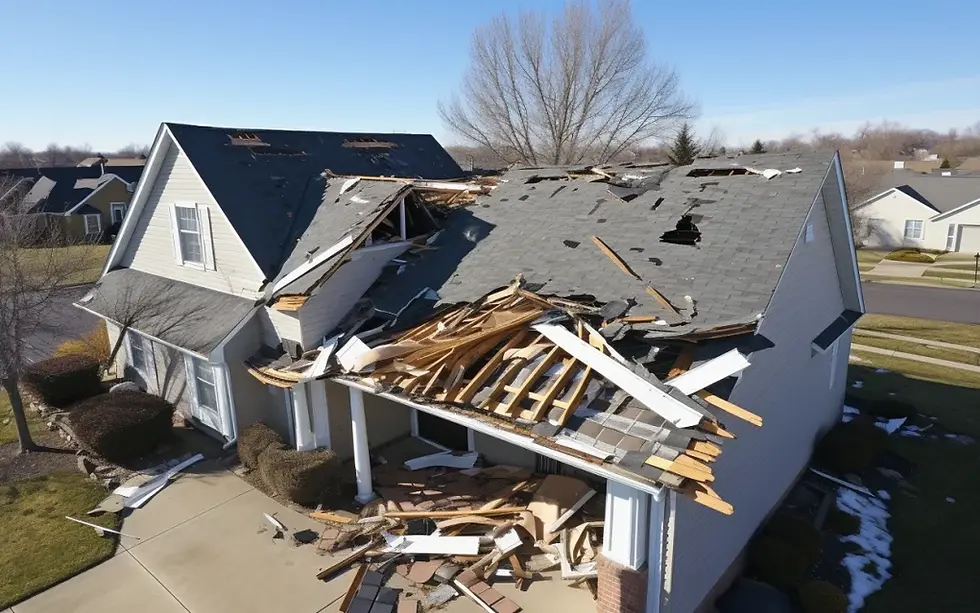


When Does Ice and Snow Weight Count as a Covered Roof Collapse Loss in Maine
A Maine roof can go from “loaded with snow” to “dangerously stressed” faster than many homeowners expect. Wet snow, layered ice, sleet, and drifting wind can add serious weight, especially on older homes, low-slope roofs, barns, garages, camps, and additions.
The insurance question is not only whether the roof failed. The harder question is whether the failure fits the policy’s definition of a covered collapse or a covered loss from the weight of ice and snow.
Most homeowners policies do cover some losses caused by the weight of ice, snow, or sleet. But coverage depends on the kind of policy, the building involved, the exact damage, and whether the roof actually collapsed or merely sagged, leaked, or showed stress.
This article is informational only and is not legal or insurance advice. Policy wording controls, and Maine property owners should read the policy and speak with a licensed insurance professional or attorney for guidance on a specific claim.

Maine roofs face a different kind of winter risk
Maine storms often bring more than light, fluffy snow. A roof may carry several layers at once:
Old packed snow from earlier storms
Heavy wet snow from a warmer system
Ice from freezing rain
Refrozen meltwater near eaves
Wind-driven drifts that pile snow unevenly
Ice dams that trap water along the roof edge
That mix matters because roof stress is about weight, not just depth. A foot of dry powder is not the same as a foot of dense wet snow or ice. Ice is much heavier than fresh snow, and repeated storms can allow weight to build before anyone notices a problem.
A roof collapse loss in Maine may involve the main dwelling, an attached structure, a detached garage, a barn, a porch, or an older seasonal camp. Coverage can differ for each one.
The key coverage question is what actually happened
Insurance policies often treat these situations differently:
Situation | How it may be treated |
A roof caves in suddenly under snow load | Often considered under collapse coverage or weight of ice and snow coverage |
Rafters crack and the ceiling sags, but nothing falls | May or may not qualify, depending on the policy definition of collapse |
Ice dams cause water to enter through shingles or flashing | Often treated as a water intrusion claim, not a collapse claim |
Snow slides off the roof and damages gutters or a deck | May be covered if sudden and accidental, subject to exclusions |
A neglected roof fails after years of rot plus snow load | Coverage may be disputed if maintenance, decay, or wear is involved |
The details matter because insurers do not usually pay just because a roof had heavy snow on it. They look at the cause of loss, the amount and type of damage, and whether any exclusions apply.
When ice and snow weight is commonly covered
A loss is more likely to be covered when the damage is sudden, accidental, and caused directly by the weight of ice, snow, or sleet.
The policy lists weight of ice and snow as a covered peril
Many homeowners policies cover damage caused by the weight of ice, snow, or sleet. In a named-perils policy, that peril must appear in the list of covered causes of loss. In an open-perils policy, the loss may be covered unless an exclusion removes it.
For example, coverage may apply if:
Heavy snow causes part of the roof framing to fail
An attached porch roof caves in under accumulated snow
A garage roof collapses after layers of snow and ice build up
Interior ceilings, drywall, flooring, or personal property are damaged because the roof failed
The policy may also cover reasonable emergency steps to protect the property after the loss, such as tarping, temporary support, or debris removal. These items vary by policy.
The damage meets the policy definition of collapse
This is one of the most important parts of the claim.
Older policies sometimes used broad collapse language. Many modern policies define collapse more narrowly. A policy may say collapse means an abrupt falling down or caving in of a building or part of a building, so that it cannot be occupied for its intended purpose.
That kind of wording can create a hard line between a covered collapse and non-covered structural distress.
A roof that is visibly bowed, cracked, or unsafe may be serious. But if it has not fallen down or caved in, the insurer may argue that it does not meet the policy definition of collapse. Some policies also state that a building or part of a building is not in a state of collapse merely because it shows cracking, bulging, sagging, bending, leaning, settling, shrinkage, or expansion.
That does not mean every sagging roof claim is denied. It means the exact wording matters.
The collapse is abrupt and accidental
Covered collapse claims often involve a sudden event. The roof gives way during or shortly after a storm. A ceiling section falls. A porch roof caves in. A garage roof drops under the load.
By contrast, insurers may question a claim when the damage appears gradual. If roof framing has been slowly failing over seasons of moisture, rot, animal damage, or poor workmanship, the insurer may argue that snow was only the final stress on a structure that had already deteriorated.
That distinction can be difficult. A roof may have an older weakness that nobody knew about, then collapse when snow load peaks. Some policies cover collapse caused by the weight of ice and snow even when hidden decay contributed, but only under certain conditions. Other policies limit that coverage.
When a roof problem may not count as a covered collapse
Not every winter roof loss is treated as a covered collapse. These are the common problem areas.
The roof only sagged or showed stress
A roof can be dangerous before it collapses. Warning signs may include:
New ceiling cracks
Doors that suddenly stick
Popping or creaking sounds
Bowed rafters or trusses
A dip in the roofline
Cracks near interior walls
Gaps where walls meet ceilings
From a safety point of view, these signs deserve immediate attention. From an insurance point of view, they may not be enough. Some policies exclude coverage for settling, cracking, shrinking, bulging, or expansion unless a covered collapse occurs.
If the structure is unsafe, do not wait for it to fall just to satisfy an insurance definition. Protect people first. Then document the condition and contact the insurer.
The main cause was wear, rot, or poor maintenance
Insurance covers sudden accidental losses. It does not usually pay to replace a roof simply because it is old, worn out, poorly built, or poorly maintained.
A claim may be contested if an inspection finds:
Long-term roof leaks
Rotten sheathing or rafters
Insect damage
Prior structural repairs that failed
Undersized framing
Poorly modified trusses
Missing roof supports
Years of deferred maintenance
Snow and ice can still be part of the story. The question becomes whether the covered snow load caused the damage, or whether the roof failed because of excluded deterioration.
The loss involves an excluded structure
Detached structures do not always receive the same treatment as the main dwelling. A garage, shed, boathouse, barn, or camp may have different coverage limits or exclusions.
Some policies cover detached garages under “other structures.” Farm buildings, commercial structures, rented seasonal properties, and vacant buildings may need separate coverage. A Maine camp used only part of the year can raise special questions if the policy has vacancy, seasonal occupancy, or maintenance conditions.
Water damage came from an ice dam instead of collapse
Ice dams are common in Maine. They form when heat from the house melts snow on the roof, and the water refreezes near the colder eaves. Water can back up under shingles and enter the home.
That loss may be covered, but it is usually analyzed differently than a roof collapse. The insurer may look at whether the water entered because of ice damming, roof condition, interior heat loss, or maintenance issues.
If an ice dam causes water stains on ceilings, that is not automatically a collapse claim. If the weight of ice and snow causes part of the roof or ceiling to cave in, the collapse language becomes more important.

What insurers look for in a Maine snow load claim
After a roof collapse or suspected collapse, the insurer will usually investigate several points.
The timing of the storm and the damage
The adjuster may ask when the snow accumulated, when the damage appeared, and whether any previous roof issues existed. Photos from before and after the storm can help.
Useful records include:
Photos of the roof before removal or repairs
Photos of interior damage
Weather information from the area
Contractor inspection notes
Emergency repair invoices
Receipts for tarping or temporary support
Prior roof repair records
Any photos showing snow depth, ice buildup, or drifting
Do not climb onto a loaded or damaged roof to take pictures. Use ground-level photos when possible and let qualified professionals handle unsafe areas.
Whether the building was properly maintained
Maintenance is often part of the investigation. The insurer may look for signs of preexisting damage, old leaks, or structural decay.
That does not mean an older roof has no coverage. Many older Maine homes still qualify for coverage when a covered peril causes a sudden loss. But poor maintenance can give the insurer a reason to limit or deny payment.
Whether emergency steps were reasonable
Most policies require the insured to protect the property from further damage after a loss when it is safe to do so. That may include:
Calling for emergency assistance if the structure is unsafe
Moving undamaged belongings away from leaks
Covering openings with a tarp
Shutting off utilities if directed by professionals
Preventing further water intrusion
Keeping damaged materials until the insurer can inspect them, when practical
Keep receipts. Take photos before and after temporary repairs. Avoid permanent repairs until the insurer has had a chance to inspect, unless delay would create more damage or danger.
How collapse coverage differs from roof repair coverage
A roof can be damaged without collapsing. Shingles can lift, flashing can fail, gutters can tear away, and ice can damage edges. Those losses may fall under different policy sections.
A collapse claim focuses on structural failure. Roof repair coverage focuses on physical damage to the roof system. Water damage coverage focuses on what happened after water entered the home.
These categories can overlap. A single Maine winter storm can create several types of loss:
Snow load cracks rafters
The roof deck caves in over one room
Melting snow enters through the opening
Drywall and insulation get wet
Furniture below the opening is damaged
Emergency crews remove snow and brace the structure
A good claim presentation separates these facts clearly. It explains what failed, when it failed, what caused it, and what property was damaged as a result.
The biggest mistake is waiting too long
When a roof shows stress from snow load, time matters. Waiting can make the structure more dangerous and make the insurance claim harder to prove.
Take these steps as soon as it is safe:
Protect people first
Leave the area if the roof, ceiling, or walls appear unstable. Call emergency services if there is an immediate danger.
Notify the insurer promptly
Most policies require timely notice. Report the date, location, and visible damage without guessing about causes you do not know.
Document everything
Take photos and video from safe locations. Capture the roof, ceilings, walls, contents, and any visible snow or ice buildup.
Hire qualified help
Use a licensed contractor, structural engineer, or qualified roof professional when the structure may be unsafe.
Keep damaged materials when practical
If contractors remove broken framing, roofing, insulation, or drywall, ask them to photograph it first and save samples if possible.
Track every expense
Keep receipts for emergency work, temporary lodging if needed, snow removal, tarping, and repairs.
Maine-specific issues that can shape the claim
Maine homes vary widely. A coastal home in a freeze-thaw cycle may face different stress than an inland home with deep snowpack. Older farmhouses, seasonal camps, and homes with additions may have mixed construction methods. A roofline with valleys, dormers, skylights, or low-slope sections may collect snow unevenly.
These details can affect both the damage and the claim.
Older homes may have hidden weaknesses
Many Maine homes have stood for generations. That does not make them unsafe, but it can make cause-of-loss questions more complex. Old framing, prior renovations, and hidden moisture damage can become part of the investigation.
If hidden decay contributed to the collapse, do not assume there is no coverage. Some policies specifically address collapse caused by hidden decay, insect damage, defective materials, or weight of contents, people, animals, rain, snow, ice, or sleet. The exact combination matters.
Additions and porches are frequent weak points
Porches, mudrooms, sunrooms, and later additions may not have the same roof pitch or framing strength as the original home. Snow can drift against taller walls, collect where rooflines meet, or sit longer on low-slope areas.
If only the porch roof collapses, coverage may still apply, but the insurer will look at whether that part of the structure is covered and whether exclusions apply.
Safe snow removal can help prevent loss
Removing snow can reduce risk, but roof work in winter is dangerous. Falls, electrical hazards, and sudden roof failure are real concerns. Many homeowners use professional roof snow removal services, especially after repeated storms or thaw-freeze cycles.
Insurance may not pay for routine snow removal done to prevent a loss. It may pay for emergency measures after a covered loss, depending on the policy. Keep the distinction clear.
What a strong claim file should show
A well-supported snow load claim tells a simple story backed by evidence.
It should show:
The roof or covered part of the structure suffered direct physical damage
The damage happened suddenly or became apparent after a specific storm period
Ice, snow, or sleet weight caused or contributed to the failure
The damaged structure is covered by the policy
The loss is not mainly due to excluded wear, neglect, rot, or faulty construction
Reasonable steps were taken to prevent more damage
This does not guarantee payment. It gives the insurer the information needed to evaluate the claim fairly.
Read the policy before accepting a coverage decision
If an insurer denies or limits a claim, the decision should point to specific policy language. Read that language closely. Look for sections titled `Perils Insured Against`, `Collapse`, `Exclusions`, `Duties After Loss`, `Other Structures`, and `Loss Settlement`.
A denial may turn on one phrase, such as:
Abrupt collapse
Falling down or caving in
Hidden decay
Weight of ice, snow, or sleet
Wear and tear
Neglect
Faulty construction
Settling, cracking, shrinking, bulging, or expansion
If the reason does not match the facts, ask questions. If the structure is severely damaged or the claim amount is large, consider getting an independent contractor, engineer, public adjuster, or attorney involved.
A roof collapse is too serious to handle on assumptions.
The practical answer
The weight of ice and snow counts as a covered roof collapse loss in Maine when the policy covers that peril, the damaged structure is insured, and the facts show that snow or ice weight caused a sudden covered collapse or direct physical damage. Coverage becomes less certain when the roof only sags, when the damage developed slowly, when maintenance problems caused the failure, or when the structure falls outside the policy’s coverage.
The best next step is simple: make the property safe, document the damage before repairs, notify the insurer promptly, and read the collapse language word for word. In a Maine winter, the difference between a covered loss and a disputed claim often comes down to proof, timing, and the policy’s exact definition of collapse.
Brought to you by Alfred Smith CPCU Claims Services LLC


Comments