.jpg)
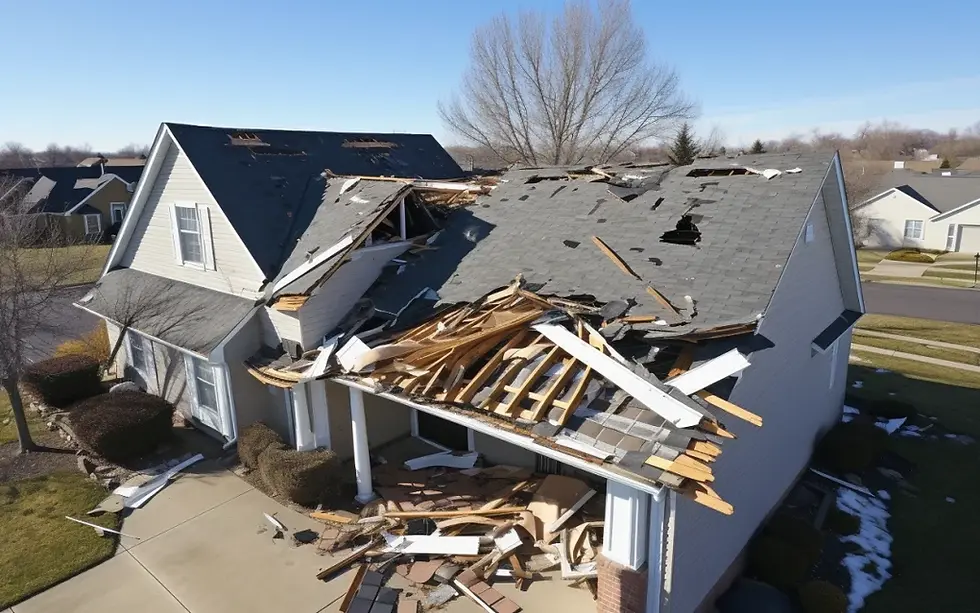



5 Signs Your Insurance Estimate Is Too Low
A low insurance estimate can look official and still be wrong.
The carrier may send a clean PDF with line items, totals, depreciation, and a claim number. That does not mean the scope is complete. It may miss code items. It may undercount labor. It may price a repair that no contractor can perform correctly.
Here are the five clearest signs your insurance estimate is too low, and what to look for before accepting payment as final.
This article is for general information only. It is not legal advice.

1. The estimate leaves out work that must happen before repairs
Some repairs cannot start until demolition, removal, or temporary protection happens first. If the estimate skips that work, the total will be too low.
Common missing items include:
Removing damaged materials
Detaching and resetting fixtures
Protecting unaffected areas
Moving contents
Drying or remediation work
Disposal fees
Temporary weather protection
Access work needed to reach the damage
In estimating software, many of these items appear as D&R, meaning detach and reset. They matter.
For example, a kitchen cabinet may not be damaged. But it may need to be detached so flooring can be removed and replaced correctly. A toilet may need to be pulled and reset for bathroom flooring. A light fixture may need to come down before ceiling repairs.
If the estimate only pays to install new material, it ignores the real sequence of work.
That gap creates a problem. The contractor either eats the cost, cuts corners, or sends a supplement later. None of those should be the default.
Look for language that sounds too simple, such as:
“Patch and paint ceiling”
“Replace flooring”
“Repair drywall”
“Remove and replace shingles”
Those phrases may be fine if the line items behind them are complete. If they are not, the estimate is likely missing labor and prep work.
2. The estimate does not account for building code upgrades
Insurance policies often treat code upgrades differently. Some policies include ordinance or law coverage. Some limit it. Some exclude parts of it.
Still, code issues cannot be ignored.
If the covered repair triggers a code requirement, the estimate may need line items for that work. This is common after roof, electrical, plumbing, structural, and exterior claims.
Examples include:
Ice and water shield requirements
Drip edge
Proper flashing
Decking replacement when spacing is too wide
Smoke and carbon monoxide detector updates
Electrical corrections tied to the repair
Permit-related requirements
Ventilation corrections during roof replacement
A low estimate may price the old condition, not the required repair.
That matters in Massachusetts, Rhode Island, and Connecticut, where older homes are common. Many homes in the Boston area have layers of prior repairs. Once damaged materials are opened up, the contractor may find framing, wiring, sheathing, or ventilation issues that must be addressed to complete the covered work.
The carrier may say, “We only owe for what was damaged.” That can be true in part. But if the covered work cannot be completed legally or safely without a required code item, the estimate needs a serious review.
Ask for the specific policy language on ordinance or law coverage. Then ask the contractor what code items apply and why.
Vague statements are not enough. You need the actual reason, the location, and the line item.
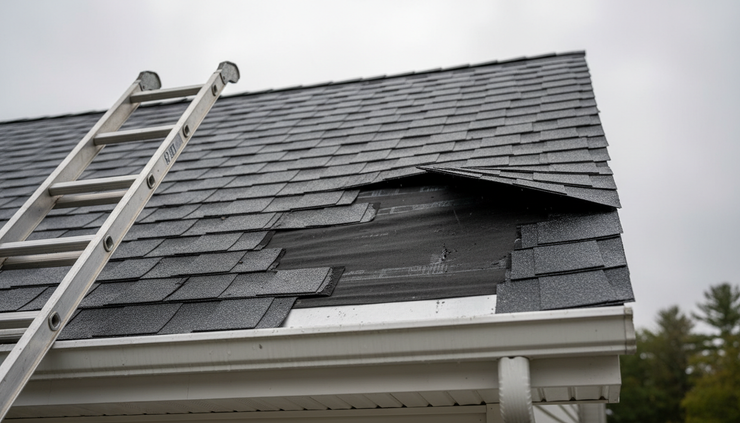
3. The estimate prices a repair that will not match
Matching is one of the biggest reasons insurance estimates come in too low.
The estimate may pay to replace one room of flooring, one slope of roofing, or one wall of siding. The problem is continuity. The repaired area may not match the remaining material.
This comes up often with:
Hardwood flooring that runs through multiple rooms
Siding with faded color or discontinued profiles
Roofing where the existing shingles are no longer available
Tile that cannot be matched
Cabinets with custom stain or finish
Paint with sheen, texture, or age differences
The carrier may owe for direct physical damage. The argument starts when a partial repair leaves the property with an obvious mismatch.
A proper estimate should address whether the repair can return the property to a reasonably uniform appearance. If the same material is not available, or if the new material will stand out, the scope may need to expand.
This is not about upgrading the home. It is about restoring the damaged property correctly under the policy.
A low estimate often avoids the issue by using a narrow scope. For example, it may pay for:
Ten pieces of siding on one wall
A small flooring patch in a hallway
One cabinet face
A few roof shingles in a visible field
That may look cheap on paper. It may also be impossible to perform without leaving a bad result.
Ask three questions:
Is the same material still sold?
Will the repair be visible after installation?
Does the damaged material connect continuously to other areas?
If the answer creates a matching problem, document it with photos, product information, and contractor notes.
4. The estimate misses labor minimums, access, and real job conditions
Insurance estimates often use unit pricing. A line item may pay a set amount per square foot, linear foot, or item.
That can work for a clean, open job. It can fail badly on small or complex repairs.
A contractor still has to mobilize labor. Crews have minimum charges. Specialty trades may not show up for a tiny task at a unit price. Materials may require minimum orders. Some work takes longer because of access issues.
Common missed costs include:
Labor minimums for plumbing, electrical, drywall, roofing, or flooring
Haul-off and disposal
Setup and cleanup
Dust control
Masking and floor protection
Multi-story access
Steep roof charges
Tight attic or crawlspace access
Specialty equipment
Delivery fees
Permit fees
A one-line repair can hide many real costs.
For example, an estimate may include a few feet of baseboard replacement. But the job may also require material pickup, cutting, installation, caulking, priming, painting, and cleanup. If the estimate pays only for the board, the total is wrong.
The same issue appears in roofing. A roof estimate may include shingle replacement but miss steep charges, high charges, ridge cap, starter strip, valley metal, flashing, ventilation, or disposal.
This is where a detailed Xactimate estimate can make a major difference. Xactimate is only a tool. It does not create a correct scope by itself. The person building the estimate still has to know what work the job requires.
A low estimate is often not a pricing problem. It is a scope problem.

5. The estimate excludes overhead and profit when multiple trades are needed
Overhead and profit, often called O&P, is another common dispute.
O&P is usually discussed when a project requires coordination of multiple trades. A loss might involve drywall, paint, flooring, plumbing, electrical, roofing, and carpentry. Someone has to manage the sequence, schedule the work, order materials, supervise quality, and handle the job conditions.
If the estimate includes several trades but no O&P, the total may be too low.
Carriers may argue that O&P is not owed unless a general contractor is used. Policy language and claim facts matter. But the need for coordination is a real cost driver.
A water loss is a simple example.
The repair may require:
Mitigation
Drywall removal
Insulation
Electrical detach and reset
Flooring
Baseboard
Painting
Cleaning
Those trades cannot all work at once. They have to be sequenced. If the estimate treats each item as isolated, it may ignore the management needed to complete the job.
Do not focus only on the percentage. Focus on the facts.
Ask:
How many trades are involved?
Does the work require sequencing?
Is a general contractor reasonably necessary?
Does the estimate include any project supervision cost?
Does the carrier explain why O&P was excluded?
A blank denial is not a strong explanation.
When a low estimate may point to bad faith
A low estimate is not always bad faith. Adjusters can make mistakes. Damage can be hidden. Contractors can disagree on repair methods.
Bad faith becomes a concern when the insurance company handles the claim unfairly, delays without a valid reason, ignores evidence, or refuses to explain its position.
Some signs of insurance bad faith include:
The carrier ignores photos, reports, invoices, or contractor supplements
The carrier delays payment without a clear reason
The carrier changes its explanation after new evidence is submitted
The estimate leaves out obvious covered damage
The carrier refuses to identify policy language supporting its denial
The carrier makes a very low offer without a reasonable investigation
In New England, unfair claim handling can also connect to state law. Homeowners often search for bad faith insurance Massachusetts / Rhode Island / Connecticut because each state has rules on unfair claim settlement conduct. In Massachusetts, the MA unfair claims practices act, M.G.L. c. 176D, is one law often discussed in this context.
That does not mean every low estimate violates the law. It means the claim handling deserves closer review if the carrier keeps ignoring clear evidence.
If you are trying to understand how to prove bad faith insurance claim issues, start with the paper trail. Save the estimate, claim letters, emails, photos, contractor notes, invoices, and all requests for information. Keep dates. Keep names. Keep copies.
The best evidence is organized and specific.
What to do before accepting the estimate
Do not treat the first estimate as final just because it came from the insurance company.
Take these steps before signing off or starting repairs:
Compare the estimate to the damage
Walk the property with the estimate in hand. Match each room, slope, wall, or damaged area to the line items.
Ask your contractor for a written scope
A verbal opinion helps, but a written scope is stronger. It should explain missing work clearly.
Photograph everything
Take wide photos and close-ups. Capture transitions, matching issues, hidden damage, and code-related conditions.
Request the carrier’s reasoning
If the carrier excludes an item, ask for the policy language and factual basis.
Submit a supplement with support
A supplement should include line items, photos, measurements, and explanations. “This is too low” is not enough.
Watch the deadlines
Policies have duties after loss, proof of loss terms, suit limitation periods, and other deadlines. Do not ignore them.
A good claim file tells a clear story. It shows what happened, what was damaged, what repair is needed, and why the original estimate falls short.

The takeaway
A low insurance estimate usually has a pattern. It misses scope, code items, matching, labor minimums, or O&P.
Do not argue from frustration. Argue from facts.
Build the claim file. Document the repair sequence. Identify the missing line items. Explain why the work is required. Ask the carrier to respond in writing.
If the estimate is wrong, the goal is not a bigger number for its own sake. The goal is a complete and accurate scope that pays for the repair the property actually needs.



Comments