.jpg)



Connecticut Flood Disclosure Law Aims to Prevent Denied Claims
A flooded basement can feel like a covered loss until the claim letter says otherwise.
That gap between what people think their homeowners or renters policy covers and what it actually covers is exactly what Connecticut’s new flood disclosure requirement is meant to address. Homeowners and renters policies in the state must now include a clear disclosure that flood damage is not covered under a standard policy.
That may sound like a paperwork change. It is not. Flood exclusions are one of the most common reasons property owners and renters are caught off guard after a storm. In Connecticut and across the Northeast, heavier rain events, overwhelmed drainage systems, coastal flooding, and saturated ground have made the issue harder to ignore.
The new rule does not add flood coverage to a standard policy. It does something more basic, but still meaningful. It forces the coverage gap into plain view before a loss happens.
This article is for general informational purposes only. Insurance coverage depends on the policy wording, endorsements, exclusions, and state rules that apply to a specific claim.
What Connecticut’s flood disclosure law actually does
Connecticut now requires homeowners and renters insurance policies to include a specific disclosure explaining that flood damage is not covered by a standard policy.
The purpose is simple. People should not have to discover a flood exclusion for the first time after they file a claim.
Standard homeowners policies usually cover many sudden and accidental losses, such as fire, theft, some types of wind damage, and certain water losses inside the home. Standard renters policies usually cover personal property and liability, subject to limits and exclusions.
Flood is different.
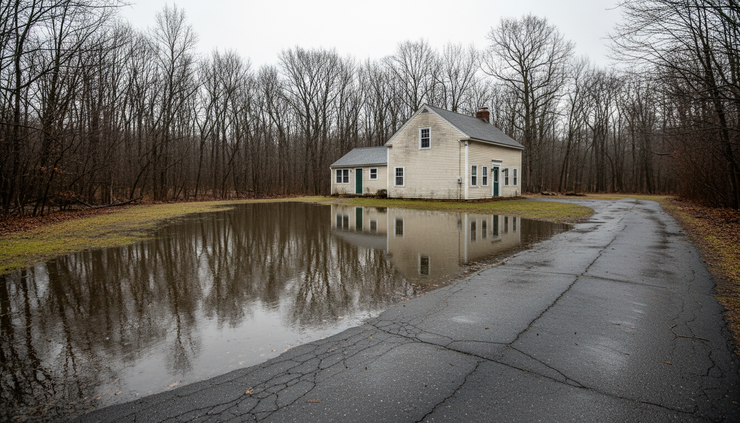
In insurance terms, flood generally refers to water that comes from outside the home and affects normally dry land. That can include:
Overflowing streams, rivers, or tidal water
Storm surge along the coast
Surface water running across a yard or driveway
Heavy rain that enters at ground level
Mudflow tied to flooding
Water that seeps in because the ground is saturated
A standard homeowners or renters policy often excludes those losses. A separate flood insurance policy is usually needed, either through the National Flood Insurance Program, often called the NFIP, or through a private flood insurer.
That distinction is easy to miss. The word “water” appears in many property claims, but insurers treat different water sources in very different ways.
A burst pipe inside the wall is not the same as water entering through a basement window during a rainstorm. A failed water heater is not the same as a coastal surge. A sewer backup endorsement is not the same as flood insurance.
The disclosure requirement is designed to make that distinction harder to overlook.
Why this is more than a technical notice
Insurance policies are full of notices. Some are useful. Some are easy to skim past. This one matters because the financial stakes can be enormous.
Flood damage can affect almost every expensive part of a home at once:
Flooring
Drywall
Electrical systems
Heating equipment
Appliances
Foundations
Personal belongings
Stored items in basements
Mold remediation costs after the water recedes
For renters, the risk looks different but can still be severe. A renter may not be responsible for repairing the building, but personal property can be lost quickly. Furniture, clothing, electronics, small appliances, books, children’s items, and stored belongings can be ruined in one event.
A denial after a flood loss can leave people paying out of pocket while also trying to find temporary housing, replace essentials, and clean up a damaged space.
The Connecticut disclosure is a response to a real knowledge gap. Many people assumed that if they had “home insurance” or “renters insurance,” water damage from a storm was included. They paid premiums, kept policies active, and felt protected. Then heavy rain hit, water came in from outside, and the claim was denied because the policy excluded flood.
The disclosure does not change the exclusion. It changes the chance that someone misses the exclusion before a storm.
That is the value of the law. It pushes the conversation earlier, when there is still time to buy separate coverage, ask questions, or adjust expectations.
Why Connecticut homeowners and renters are vulnerable to flood claim surprises
Connecticut is not Florida. It is not Louisiana. That may be part of the problem.
Many residents do not think of the state as a high-flood-risk place unless they live directly on the shoreline or near a mapped flood zone. But flood risk does not stop at FEMA flood maps, and it does not only follow the coastline.
Connecticut has several flood risk patterns that can catch property owners and renters off guard.
Heavy rain is testing older drainage systems
The Northeast has seen more intense rain events in recent years. When a large volume of rain falls in a short period, storm drains, culverts, sump systems, and local waterways can become overwhelmed.
That can lead to street flooding, basement flooding, and water flowing into homes that have never had a major water issue before.
A property does not need to sit next to a river to flood. Poor grading, blocked drains, saturated soil, steep driveways, and aging municipal infrastructure can all play a part.
Connecticut has an older housing stock
Older homes often have basements, stone or block foundations, older windows, aging drainage systems, and mechanical equipment located below grade. These features can make flood losses more costly.
A finished basement adds another layer of exposure. What was once storage space may now be a family room, home gym, guest room, office area, laundry room, or playroom. When water enters, the loss is no longer limited to a concrete floor and a few boxes.
Even unfinished basements can hold expensive systems. Boilers, furnaces, water heaters, electrical panels, and stored possessions are common below ground.
Shoreline communities face multiple water threats
Connecticut’s shoreline has its own risk profile. Coastal storms, tidal flooding, storm surge, wind-driven rain, and erosion can overlap in complicated ways.
A standard homeowners policy may cover some wind-related damage, depending on the policy and deductible. It may exclude flood or storm surge. When a coastal storm causes several kinds of damage at once, claim handling can become more complex.
That is another reason the disclosure matters. It encourages policyholders to separate the risks before a storm, rather than trying to untangle them after one.

The key difference between flood insurance and standard property insurance
The biggest misunderstanding is the idea that “water damage” is a single category. Insurance policies do not work that way.
Most policies focus on the source of the water and how it entered the home.
A standard homeowners policy may cover sudden and accidental water damage from inside the home. For example, a pipe bursts behind a wall and damages the ceiling below. That is very different from rainwater entering at ground level after a storm.
Flood insurance generally exists to cover direct physical loss caused by flooding, subject to its own limits, exclusions, waiting periods, and definitions. It is not a perfect product, and it does not cover everything. But it is the tool designed for the flood gap that standard property policies usually leave open.
A simple comparison helps:
Type of damage | Standard homeowners or renters policy | Separate flood insurance |
Burst pipe inside the home | Often covered, subject to policy terms | Usually not the main policy involved |
Rain entering through a storm-created roof opening | May be covered, depending on facts and policy | Usually not the main policy involved |
Surface water entering through a door or basement window | Usually excluded as flood | Often the type of loss flood insurance is designed for |
River, stream, or coastal water entering the home | Usually excluded as flood | Often covered, subject to flood policy terms |
Sewer or drain backup | Often excluded unless endorsed | Not the same as flood coverage |
Water seepage over time | Often excluded | Often limited or excluded, depending on cause |
For renters, the same general idea applies. A renters policy may cover personal property for many named or covered causes of loss, but flood damage is usually outside the standard policy. A renter who wants protection for belongings damaged by flood generally needs a separate flood policy or another product that specifically includes it.
The Connecticut disclosure should help people ask better questions, such as:
Does this policy cover water that enters from outside?
Do I have any sewer or drain backup coverage?
Is my basement or ground-floor property subject to special limits?
Do I need a separate flood policy?
Is there a waiting period before flood coverage begins?
Are temporary living expenses included after a flood?
How are personal belongings valued after a flood loss?
These questions are practical. They also need to be asked before rain is in the forecast, not when the sump pump has already failed.
What the disclosure does not do
The new disclosure requirement should reduce confusion, but it does not solve every coverage problem.
A notice on a policy does not make flood insurance affordable. It does not force every homeowner or renter to buy separate coverage. It does not change how much rain falls in a short period. It does not make an excluded claim payable.
Most of all, it does not replace a real policy review.
A disclosure can tell someone that a standard policy excludes flood. It cannot answer every property-specific question, such as whether a certain basement layout creates extra risk, whether contents coverage is high enough, or whether the property sits near an unmapped drainage issue.
There is also a timing problem. Flood insurance often has a waiting period before coverage takes effect. People who wait until a major storm is approaching may find that it is too late to put coverage in place for that event.
That makes the disclosure most valuable when it triggers action during a calm period. The right time to review flood exposure is not during a flash flood warning. It is during renewal, after buying or renting a new place, or when finishing a basement, replacing major systems, or moving valuable items downstairs.
What renters should take from the new requirement
Flood insurance conversations often focus on homeowners, but renters have a lot at stake.
A landlord’s building policy generally protects the structure. It does not insure a tenant’s personal belongings. If floodwater ruins a renter’s furniture, clothes, electronics, mattress, or stored items, the landlord’s insurance is unlikely to replace those belongings.
A standard renters policy may be affordable and useful for many risks, but flood is usually excluded. The new disclosure should make that clearer.
Renters should pay close attention if they live in:
A basement apartment
A first-floor unit
A building near a river, brook, or marsh
A shoreline community
An area with poor street drainage
A neighborhood that has flooded before
A property where laundry or storage is below grade
Storage is an overlooked issue. Many renters keep seasonal items, sports equipment, tools, keepsakes, and furniture in basement storage areas. Floodwater does not distinguish between finished living space and a storage cage.
Renters can also face extra costs after a flood, including temporary lodging, replacing essentials, and moving expenses. Whether any of those costs are covered depends on the policy. Renters should not assume loss-of-use coverage applies to flood if flood is excluded.
What homeowners should review now
For homeowners, the new disclosure should lead to a practical review, not panic.
The goal is to understand the gap, decide whether flood coverage makes sense, and reduce preventable damage. Even people who choose not to buy separate flood insurance should make that choice knowingly.
Check the policy’s water damage language
Start with the declarations page and the exclusions section. Look for terms such as `flood`, `surface water`, `water below the surface of the ground`, `seepage`, `storm surge`, `overflow`, `backup`, and `sump`.
Policy language can be dense, but those words usually point to the key limits.
Also check endorsements. Some policies include or offer optional coverage for sewer backup, sump overflow, service lines, or limited water backup. These are not the same as flood insurance, but they may help with certain water losses.
Ask about separate flood coverage
Separate flood insurance can come through the NFIP or a private insurer. The right option depends on the property, location, lender requirements, coverage needs, price, and availability.
A mortgage lender may require flood insurance if a home is in a high-risk flood zone. But lender requirements are not the same as actual risk. Homes outside mapped high-risk zones can still flood.
That is one of the most dangerous assumptions in property insurance. “Not required” does not mean “not exposed.”
Look at the basement honestly
Basements deserve special attention in Connecticut.
A homeowner should know what is stored below grade, what systems are located there, and how water would move if it entered. Finished walls and flooring can hide risk. So can years of dry weather.
Useful questions include:
Is the grading sloped away from the foundation?
Are gutters and downspouts moving water far enough away?
Is there a sump pump?
If there is a sump pump, is there battery backup?
Are valuable belongings stored directly on the floor?
Are mechanical systems elevated where possible?
Has water ever entered during heavy rain?
Do neighbors report flooding or drainage problems?
Insurance is one layer of protection. Maintenance and mitigation are another.
Document the home before a loss
Photos and videos can make a claim easier, even when coverage questions arise. Homeowners should keep a basic inventory of major belongings, appliances, mechanical systems, and finished spaces.
For higher-value items, receipts, model numbers, serial numbers, and appraisals can help.
Store the inventory somewhere accessible if the home is damaged. A cloud folder, password-protected storage, or a secure off-site copy can work.
Why the timing matters as premiums keep rising
Connecticut homeowners premiums are still rising. The briefed estimate for 2026 puts the average at about $2,252 per year, up roughly 2%. That increase may sound modest compared with some states, but it sits within a broader pattern affecting much of New England.
The drivers are familiar:
Aging housing stock
Higher rebuilding costs
More expensive labor and materials
Larger losses from severe storms
Greater pressure in shoreline communities
More claims involving water, wind, trees, and power disruptions
Rising premiums create a hard reaction. People look for ways to save. They may raise deductibles, decline optional endorsements, reduce coverage where they can, or skip separate flood insurance if it is not required by a lender.
That is understandable. Insurance is expensive, and household budgets are under pressure.
But flood is the kind of risk that can turn a short-term savings decision into a long-term financial problem. One severe basement flood can cost more than years of premiums. For a coastal or low-lying property, the math can be even more serious.
The disclosure law arrives at a moment when people are reviewing costs more closely. That makes clarity even more important. If a policy costs more each year, buyers should at least know what the premium does not buy.
Connecticut’s guaranty fund changes add another layer of protection
Flood disclosure is not the only Connecticut property insurance development worth watching.
Connecticut’s property insurance guaranty fund cap has increased to $1 million per disaster under Public Act 26-69, according to the briefed information. Unearned premium refunds also rose from $2,000 to $50,000.
The guaranty fund matters in a different kind of bad scenario. It can become relevant when an insurer becomes insolvent, meaning the company cannot meet its obligations. Guaranty associations are designed to provide a safety net for covered claims and certain premium refunds, subject to legal limits and rules.
This is separate from flood coverage. A guaranty fund increase does not make an excluded flood claim covered. If the policy excludes flood, the guaranty system does not erase that exclusion.
Still, the change matters because insurance is a promise about the future. Policyholders depend on the carrier being there when something goes wrong. A higher cap can provide more protection if a covered claim is caught up in an insurer insolvency.
Together, the flood disclosure and guaranty fund changes point in the same direction. Connecticut is trying to make property insurance protection clearer and more reliable before a crisis.
One change addresses a coverage misunderstanding. The other addresses carrier failure risk.
Both are reminders that the details behind a policy matter.

Denied flood claims often come down to the source of water
When a water claim is denied, the reason often comes back to one question. Where did the water come from?
That sounds simple, but after a storm, the answer can be messy.
A home may have roof damage, water seepage, surface flooding, sewer backup, and sump overflow in the same event. The insurer may inspect the property, review weather reports, examine entry points, and apply policy language to each part of the loss.
For example, consider these common scenarios.
A storm knocks a tree limb through the roof, and rain enters through the opening. That may be treated differently from water that flowed across the yard and entered through the basement hatch.
A sump pump stops working during heavy rain. Coverage may depend on whether the homeowner bought a sump overflow or water backup endorsement, and the policy may still exclude broader flood conditions.
A municipal drain backs up into a basement. A sewer or drain backup endorsement may be relevant, but it may have a lower limit than the main dwelling coverage.
A nearby stream overflows and enters the first floor. That is the classic type of event standard policies often exclude as flood.
The new Connecticut disclosure will not eliminate disputes over cause. But it should reduce the number of people who are completely surprised that outside water is treated differently.
What to do before the next renewal
The best use of the disclosure is to treat it as a prompt. The next time a homeowners or renters policy renews, the policyholder should review flood exposure alongside price.
A practical review can be simple.
Read the flood disclosure
Do not treat it as routine paperwork. It explains a major coverage gap.
Find the flood exclusion
Look for the actual policy language. The disclosure is the warning. The policy is the contract.
Ask how the policy treats different water sources
Flood, sewer backup, sump overflow, seepage, burst pipes, and roof leaks can all be treated differently.
Check optional endorsements
Water backup, sump overflow, and service line endorsements may address some risks, but they are not substitutes for flood insurance.
Price separate flood insurance
Even if the decision is no, get a quote or ask an agent what options exist. The answer may depend on the property and market.
Review contents and basement limits
Finished basements and stored belongings can create large losses. Know whether limits apply.
Take mitigation steps
Clean gutters, extend downspouts, test sump pumps, improve grading, elevate valuables, and document the property.
Keep records
Save policy documents, disclosures, photos, receipts, and correspondence.
This kind of review does not require insurance expertise. It requires asking the plain questions that often get skipped until after damage occurs.
The real message behind the law
The Connecticut flood disclosure law is built on a blunt truth. Many people did not know they lacked flood coverage until they needed it.
That is a painful way to learn how insurance works.
A standard homeowners or renters policy can still be valuable. It can protect against many serious losses. But it is not an all-risk shield against every kind of water damage. Flood is usually its own category, with its own policy and its own rules.
For Connecticut residents, the new disclosure should become a signal to pause and review. Not every property has the same risk. Not every household will make the same coverage decision. But no one should mistake silence for protection.
The next heavy rain event will not care whether a policyholder understood the exclusion. The claim decision will come from the policy language. The time to find the gap is before the water gets in.



Comments