.jpg)



Massachusetts Old Homes and Insurance Claims What Century Old Houses Mean for Your Settlement
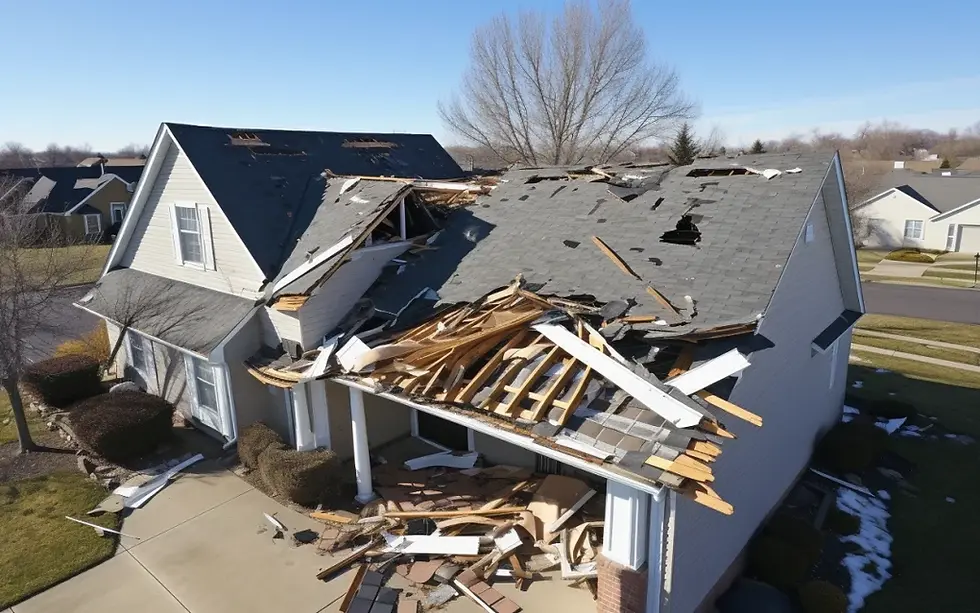
A storm can damage any house. A century-old Massachusetts house brings a harder question: what part of the damage came from the storm, and what part came from 100 years of wear?
That question can change a claim by thousands of dollars.
Massachusetts has some of the oldest housing stock in the country. The Insurance Research Council has pointed to the state’s older homes as one factor that can push insurance costs higher. That makes sense on the ground. A 1905 triplex in Worcester, Lynn, New Bedford, Somerville, or Springfield may have plaster walls, layered roofing, aging masonry, outdated wiring, narrow framing cavities, old plumbing, and past repairs hidden behind finished surfaces.
When a loss happens, those conditions do not just affect the repair. They affect coverage, pricing, scope, depreciation, code upgrades, and the settlement conversation.
This article is informational only and does not replace advice from a licensed public adjuster, attorney, contractor, or insurance professional.

Why Massachusetts’ older housing stock matters in insurance claims
Massachusetts did not grow around modern subdivisions alone. Many homes were built long before today’s building codes, materials, and construction methods.
That creates two problems for insurance claims.
The first is loss investigation. Older homes often have pre-existing wear. Water stains may have appeared before the windstorm. Roof decking may be brittle. Masonry may have cracked over decades. Electrical or plumbing systems may have been updated in sections, with old work tucked behind new finishes.
The second is repair pricing. Restoring an older home can cost more than repairing newer construction. Skilled labor may be needed to match plaster, millwork, slate, trim, hardwood, brick, or unusual framing. Contractors may find hidden damage only after demolition starts.
This is one reason older housing stock can become a rate driver. Insurers look at the cost and frequency of claims. If a state has many homes that are expensive to inspect, repair, and bring up to current standards, that pressure can show up in premiums.
For homeowners, the rate issue is frustrating. The claim issue is more immediate. After a loss, age becomes part of the settlement argument.
The main dispute is often wear and tear versus storm damage
Most homeowners policies are built around a basic idea. They cover sudden and accidental direct physical damage caused by a covered peril, subject to exclusions and policy limits.
They do not cover routine aging, poor maintenance, long-term seepage, rot, corrosion, settling, or ordinary wear and tear.
That sounds simple until a real house is involved.
Take a 1905 triplex with wind-driven rain after a strong coastal storm. Water appears on the third-floor ceiling. The homeowner reports roof damage. The insurer sends an adjuster. The adjuster sees missing shingles, but also older flashing, patched roof areas, and staining that may predate the storm.
Now the claim turns on cause.
Was the ceiling damaged because wind lifted shingles during the storm?
Was the water intrusion due to flashing that had failed over time?
Did both conditions play a role?
In older Massachusetts homes, both sides may have evidence. A storm may create new damage. Age may make that damage worse. The insurer may try to separate covered damage from non-covered conditions.
That separation can affect the settlement in several ways:
The insurer may pay for interior water damage, but deny the roof repair.
The insurer may pay for a small roof patch, not full replacement.
The insurer may apply heavy depreciation to older materials.
The insurer may exclude rot, mold, or long-term leakage.
The insurer may ask for proof that the storm caused a new opening.
The homeowner’s job is not to argue that the house is old. The job is to show what changed because of the covered event.
In an old-home claim, the most important question is often not “Is there damage?” It is “What caused this damage, and when did it happen?”
What a century-old home can do to your settlement
Age can affect a claim even when the loss is covered. The impact usually shows up in the estimate, the depreciation, and the code issues.
Replacement cost and actual cash value are not the same
Many homeowners carry replacement cost coverage. That does not always mean the insurer pays the full replacement amount up front.
Policies often start with an actual cash value payment. Actual cash value usually means replacement cost minus depreciation. After the work is completed and documented, the homeowner may recover withheld depreciation if the policy allows it.
Older homes can face higher depreciation because major components are near or beyond expected service life. That may include roofing, exterior paint, flooring, cabinets, plumbing, or heating equipment.
For example, if a storm damages a very old roof, the insurer may agree that some roof damage is covered but depreciate the roof heavily. The first payment may be much lower than the contractor’s full replacement price. If replacement cost benefits apply, the homeowner may need to complete repairs before collecting the recoverable portion.
This creates a cash-flow problem. The home may need urgent work, but the first check may not be enough to hire a contractor.
Matching can become a serious fight
Older homes often have materials that are hard to match. That matters after partial damage.
A water loss may damage one section of original hardwood flooring. A kitchen fire may damage plaster walls and custom trim. Hail or wind may damage part of a slate or architectural roof. A tree may crush one elevation of wood siding.
The insurer may estimate only the directly damaged area. The homeowner may argue that a patch will leave a visible mismatch.
Matching rules vary by policy language, state law, and claim facts. The key is documentation. Photos, contractor notes, product availability information, and repair samples can help show whether a reasonable match is possible.
Hidden conditions can expand the scope
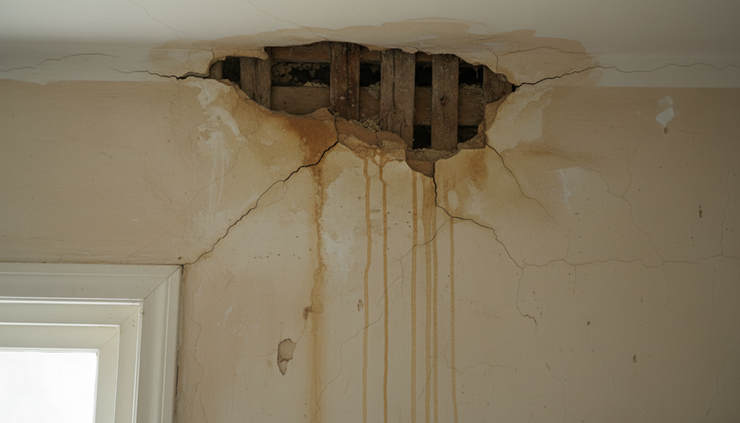
Old houses hold surprises. A contractor may open a wall for covered water damage and find knob-and-tube remnants, old galvanized piping, deteriorated sheathing, nonstandard framing, asbestos-containing materials, or layers of prior repairs.
Some hidden conditions are part of the covered loss. Others are not.
If the storm created the opening and damaged interior finishes, opening the wall may be part of the repair. If the wall reveals old rot that existed before the storm, the insurer may exclude that portion. If code requires additional work once the wall is open, the answer may depend on ordinance or law coverage.
The timing matters. Homeowners should document hidden conditions as soon as they are found. Photos before removal, contractor notes, and prompt notice to the insurer can reduce disputes later.
Ordinance or law coverage can change the outcome
Code upgrades are one of the biggest claim issues in old Massachusetts homes.
A covered loss may damage one part of the building, but current building code may require repairs that go beyond replacing what was there before. That can include electrical updates, structural work, fire separation, stair or railing changes, insulation, ventilation, plumbing changes, or demolition of undamaged materials to access and complete compliant repairs.
Standard policies often limit or exclude the increased cost of complying with building codes unless the homeowner has ordinance or law coverage. Some policies include a small amount. Others require an endorsement. The details matter.
Ordinance or law coverage may apply to different buckets of cost:
Claim cost | What it means | Why older homes are affected |
Increased cost of construction | Extra cost to rebuild damaged areas to current code | Older systems may not meet modern requirements |
Demolition of undamaged portions | Cost to remove parts of the building not directly damaged | Code may require broader tear-out |
Loss to undamaged portions | Coverage when code requires replacement of building parts that were not damaged | Partial losses can trigger larger compliance work |
This coverage can be the difference between a settlement that restores the property and one that leaves a major funding gap.
For a 1905 triplex, code work can be especially important. Multi-family homes often carry added life-safety concerns. Fire separation, egress, electrical service, and alarms may become part of the repair discussion if the loss opens walls or affects major systems.
The insurer may ask for written code citations from the local building official. A contractor’s opinion alone may not be enough. When possible, get the requirement in writing and connect it to the covered repair.
The 1905 triplex problem shows how claim scope grows
Consider a simplified example.
A windstorm damages the roof of a 1905 three-family home. Water enters the third-floor ceiling and travels down into a wall cavity. The insurer inspects and writes for limited shingle replacement, ceiling stain blocking, and repainting one room.
The contractor opens the ceiling and finds old plaster detached from wooden lath. The roof deck is uneven. Flashing around a chimney has older repairs. Some wiring in the affected area must be addressed before the ceiling can be closed. The local inspector requires certain work to meet current code once the repair begins.
The claim now has several separate questions.
What did the wind damage?
Missing shingles, lifted roofing, damaged flashing, and fresh interior water staining may support the covered portion.
What was already worn out?
Old flashing, prior patches, brittle materials, and long-term staining may lead to exclusions or depreciation.
What must be repaired to restore the covered damage?
If plaster removal is needed to access wet materials, dry the structure, and complete proper repairs, it may belong in the scope.
What code upgrades are required?
If code requires changes because of the covered repair, ordinance or law coverage may be needed.
What documentation proves the difference?
Photos, weather data, contractor reports, moisture readings, invoices, permits, and inspection notes all matter.
This is where many settlements go wrong. The dispute is not always about whether the insurer will pay anything. The dispute is often about whether the estimate reflects the real work needed.

How to protect the value of an old-home claim
A strong claim record helps separate covered damage from age-related conditions. It also helps show why a repair costs more than a standard modern-home estimate.
Document the condition before major work starts
Take photos and video before cleanup, tarping, demolition, or repairs. Capture wide shots and close-ups.
For older homes, include:
The source area, such as roof, siding, chimney, window, or pipe
Interior damage from multiple angles
Stains, cracks, bulging plaster, and wet materials
Personal property damage, if any
Temporary repairs and mitigation work
Debris and removed materials
Keep damaged materials when practical. If a contractor removes a piece of roofing, pipe, trim, or plaster that helps prove the cause, photograph it clearly.
Separate old damage from new damage
Old conditions do not defeat every claim. They just need to be identified honestly.
If there was prior staining, say so. If a ceiling had an old mark but became wet after the storm, document the change. If a chimney had age cracks but the storm created new water entry, focus on the new physical damage.
Insurers respond better to a clear timeline than to broad claims that everything was perfect before the loss.
Useful timeline details include:
Date and time of the storm or event
When damage was first seen
When emergency repairs were made
Who inspected the home
What changed after the event
Any prior repairs in the same area
Get detailed contractor estimates
A one-page lump-sum estimate rarely helps an old-home claim. Ask for line items.
The estimate should show labor, materials, access, demolition, drying, debris removal, protection of undamaged areas, permits, and code-related costs when they apply.
If special materials are needed, the estimate should explain why. Original plaster, custom millwork, slate, hardwood, masonry, and older siding may need more labor than common modern materials.
Ask about ordinance or law coverage early
Do not wait until the end of the claim to check code coverage. Review the declarations page and policy forms. Look for ordinance or law limits, endorsements, and exclusions.
If code upgrades are likely, ask the contractor or local official to identify the requirement in writing. The strongest request ties three things together:
The covered damage
The required repair
The code provision that increases the cost
That connection helps show why the added work belongs in the claim.
Watch for depreciation that does not fit
Depreciation should relate to the age and condition of the damaged item. In old homes, insurers may apply large depreciation amounts. Some may be fair. Some may deserve review.
Questions to ask include:
Did the adjuster depreciate labor, materials, or both?
Does the policy allow labor depreciation?
Did the estimate use the correct age and condition?
Is any depreciation recoverable after repairs?
What proof is needed to collect withheld depreciation?
The answers depend on policy language and state rules. If the numbers are large, get help reviewing them.
Why cheap repairs can cost more later
Older homes can punish shortcuts.
A quick patch may stop visible water for a few weeks while moisture remains behind plaster. Repainting a stained ceiling without drying the cavity may hide damage. Replacing modern shingles over a failing older roof assembly may lead to another leak. Ignoring code issues may create trouble when the home is sold, refinanced, or inspected.
Insurance claims are not blank checks for renovation. Still, a covered repair should be complete enough to return the damaged property to its covered pre-loss condition, subject to policy terms. In a century-old house, that often requires careful investigation.
The goal is not to make the insurer pay for every old problem. The goal is to prevent old problems from being used to underpay new damage.

The takeaway for Massachusetts homeowners with century-old houses
Massachusetts old homes and insurance claims are hard because age is always part of the story. Insurers know older housing stock can increase claim costs. Homeowners know a century-old building may need specialized repairs that a standard estimate misses.
The strongest settlements come from clear proof. Show what happened, what changed, what must be repaired, and what code requires. Keep the claim organized. Get detailed estimates. Ask direct questions about depreciation and ordinance or law coverage.
A century-old home does not make a claim invalid. It makes the claim more fact-specific. The better the facts are documented, the harder it is for age alone to control the settlement.




Comments