
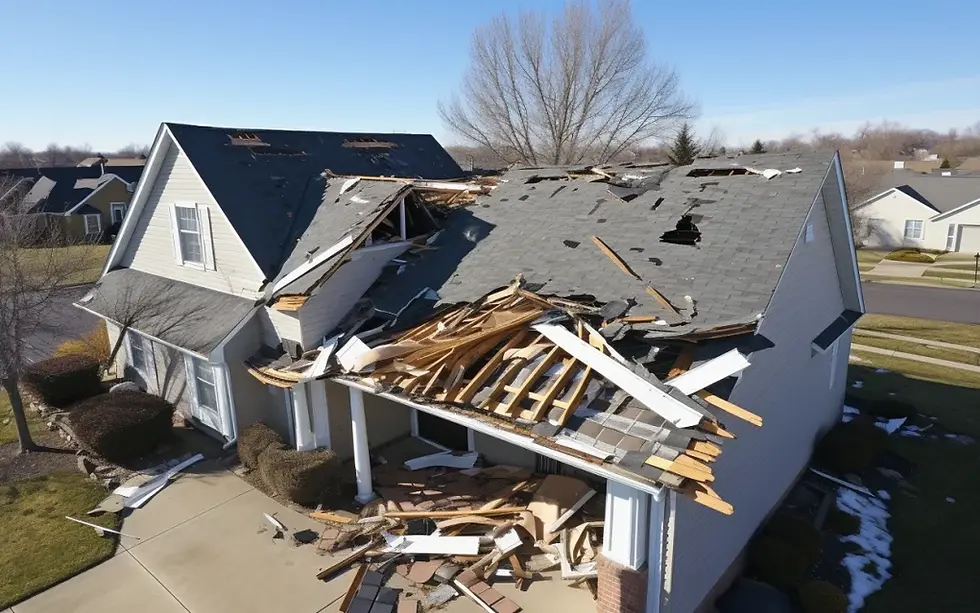


Rhode Island Property Claims in 2026: What Changed and What Homeowners Should Know
By Alfred Smith, CPCU | Alfred Smith CPCU Claims Services LLC
A storm loss is hard enough before the insurance issues start. In Rhode Island, where older homes, coastal weather, heavy rain, wind, ice, and tree damage all show up in the same year, the rules around property claims matter.
A lot of my work is in Rhode Island, including Providence, North Providence, Johnston, and surrounding communities. This was a busy year at the State House for property insurance. Some changes passed. Some important proposals stalled. A few old rules and claim habits are still worth repeating.
Here is a plain-English roundup of what changed in 2026, what did not, and what homeowners should keep on their radar.

What passed in 2026
The biggest changes were aimed at storm preparation, insurer insolvency protection, and protecting homeowners who ask questions about their policies.
None of these changes mean every claim will suddenly become simple. They do mean Rhode Island is paying closer attention to how homes are protected and how policyholders are treated when the insurance market gets unstable.
Rhode Island created a framework for home hardening grants
The General Assembly passed legislation that gives the Department of Business Regulation a framework to seek grants for a home hardening program.
The goal is simple: help homeowners make roofs and homes more storm-resistant before the next major weather event.
When people hear “home hardening,” they may think of hurricane shutters or coastal construction. In practice, it can also mean practical improvements to the building envelope, such as:
Stronger roof systems
Better roof-to-wall connections
Impact-resistant openings where appropriate
Measures that help keep wind and water from entering the home
Repairs that reduce the chance of cascading damage after a storm
The Department of Business Regulation explained the idea to lawmakers in practical terms. If the envelope of the home stays standing during a storm, additional damage may be avoided.
That matters in Rhode Island. A failed roof covering can lead to wet insulation, damaged ceilings, soaked walls, electrical concerns, mold issues, and displacement from the home. A single opening can turn a manageable roof claim into a whole-house water claim.
For homeowners, the immediate takeaway is this: if your roof is already due for replacement, keep an eye on this program. Do not assume every roof job will qualify. Programs like this usually have rules, funding limits, application steps, and inspection requirements. Still, it is the kind of program that could make a meaningful difference if funding becomes available and the work lines up with your home’s needs.
The safety net is larger if an insurer fails
For insurer insolvencies occurring after January 1, 2026, the covered amount for first-party property claims under the Rhode Island Property and Casualty Insurance Guaranty Association increases to $1,000,000.
That is a significant number for homeowners. It matters because insurer insolvency is not just a Florida or Gulf Coast problem. Carriers enter and leave markets. Reinsurance costs change. Storm models change. Underwriting appetites change. New England is not immune from insurance market stress.
The guaranty association exists as a backstop when a covered insurer becomes insolvent. It does not turn a bad claim into a perfect one, and it does not replace the need to understand your own policy. But a higher covered amount can be an important protection for larger residential losses.
Think about a severe fire, a major wind event, or a loss involving an older home with expensive code-related repairs. Reconstruction costs in Rhode Island can climb quickly, especially when labor, materials, debris removal, and temporary housing are involved.
The increase does not mean every claim automatically gets paid up to $1,000,000. Coverage still depends on the policy, the facts of the loss, and the guaranty association rules. But the larger cap gives homeowners more protection than they had before when an insolvency falls within the law’s timing and scope.
Homeowners cannot be penalized just for asking about policy terms
Another important change protects personal lines insureds who ask questions about their coverage.
Casualty insurers may not assess a surcharge or penalty simply because a personal lines insured asks about policy terms.
That is a good and practical rule. Homeowners should not be afraid to ask what their policy means. A question is not the same thing as a claim. Asking whether wind-driven rain is covered, whether a deductible applies, or what the policy says about replacement cost should not create a penalty by itself.
That said, words still matter. If you have actual damage and you report it as a claim, that is different from asking a general coverage question. If you are unsure which one you are doing, be clear with the person you speak with.
A simple example:
“I am trying to understand my policy terms. I am not reporting a claim at this moment. Can you explain how my deductible and roof coverage work?”
If there is damage, do not delay notice just to avoid a claim. Late notice can create problems. But for general policy questions, Rhode Island has made clear that homeowners should not be punished merely for asking.
What did not pass, but is worth watching
Some proposals that would have changed claims handling more directly did not pass. Homeowners should still pay attention to them because stalled bills often return in a later session, sometimes in changed form.
Stronger rules against bad claim handling stalled
Two 2026 bills, H 7517 and S 2311, would have made significant changes to unfair claims practices in Rhode Island.
The proposals identified several claim handling practices that would have received closer scrutiny, including:
Failing to reasonably investigate first-party property claims
Relying on adjusters without adequate training
Depreciating labor costs when calculating actual cash value
Failing to account for overhead and profit where appropriate
Other disputed claim handling practices affecting payment and evaluation
These issues come up often in property claims.
A homeowner may see a repair estimate from the insurer and wonder why the numbers are so far below a contractor’s estimate. Sometimes the difference is legitimate. Sometimes the scope is incomplete. Sometimes the pricing is outdated. Sometimes the dispute involves depreciation, labor, overhead and profit, matching, code upgrades, or whether certain damage came from the covered event.
The stalled bills show that lawmakers are aware of these disputes. They also show that Rhode Island has not yet adopted the more specific claim handling rules those bills proposed.
That matters because homeowners should not assume the law provides a quick fix for every unfair-feeling claim decision. In many claims, the real work still happens through documentation, policy language, estimates, inspections, negotiation, and, when needed, formal dispute processes.
Labor depreciation remains a major issue to watch
One issue in the proposed bills deserves special attention: labor depreciation.
Many homeowners understand depreciation on materials. A 15-year-old roof has aged. A section of old flooring has wear. Appliances and building materials do not stay new forever.
Labor is different. You do not install “used labor” into a home. A contractor charges current labor rates to remove and replace damaged property. That is why disputes over labor depreciation can become so heated.
Some policies and state laws treat this issue differently. The key point for Rhode Island homeowners is that the proposed 2026 bills would have addressed labor depreciation, but they did not pass. That means the answer may still depend on the policy language, the insurer’s position, and the facts of the claim.
If your estimate includes depreciation, look closely at what is being depreciated. Is it only materials? Is labor included? Is the depreciation clearly shown? Does the policy define actual cash value? Those details matter.

What has not changed for Rhode Island homeowners
Legislative updates are useful, but most claim outcomes still turn on the same core issues: coverage, causation, documentation, and timing.
Here are the long-standing points homeowners should remember.
Your policy controls the claim
A property policy is a contract. The adjuster’s opinion matters, but the policy language matters more.
Before accepting a denial or a low estimate, look at the actual policy provisions involved. Pay attention to:
Covered causes of loss
Exclusions
Deductibles
Duties after loss
Replacement cost provisions
Actual cash value provisions
Limits for certain kinds of property
Ordinance or law coverage
Water, sewer, flood, and surface water exclusions
Appraisal or dispute resolution language
Many claim disputes begin because the homeowner, contractor, and insurer are talking past one another. One person is talking about what happened. Another is talking about what repairs cost. The insurer may be talking about what the policy allows.
All three topics matter, but they are not the same.
Prompt notice still matters
If you discover damage, report it promptly. Do not wait weeks or months while trying to decide whether the damage is “bad enough.”
Prompt notice gives the insurer a chance to inspect the damage before conditions change. It also protects you from the argument that late reporting made the claim harder to investigate.
Prompt notice does not mean you need to know everything on day one. You can report the loss and explain that investigation is ongoing.
A clear first notice might include:
Date and approximate time of loss, if known
Type of event, such as wind, fire, burst pipe, or weight of ice and snow
Areas of known damage
Immediate steps taken to protect the property
Photos or video, if available
Whether temporary repairs are needed
Keep a copy of what you send.
Temporary repairs are usually different from permanent repairs
Most policies require homeowners to protect the property from further damage. That can mean tarping a roof, shutting off water, boarding a broken window, or removing wet materials when needed.
Save receipts. Take photos before and after temporary work. If emergency work is necessary, document why it was necessary.
Be careful with permanent repairs before the insurer has had a fair chance to inspect. Sometimes permanent work cannot wait, especially when safety is involved. But if you replace or remove damaged property too quickly and keep no records, you may create a proof problem.
A good rule is simple: document first, protect the property, and preserve evidence when possible.
Flood is still different from many water claims
Rhode Island homeowners should be careful with the word “flood.”
In insurance, flood usually means something specific. Standard homeowners policies often exclude flood and surface water. Coverage may require a separate flood policy.
That does not mean every water claim is excluded. A burst pipe, wind-created opening, appliance leak, ice dam, sewer backup, or rain intrusion may each be treated differently depending on the policy and facts.
The label matters less than the cause. When discussing water damage, describe what happened as accurately as possible:
Water entered through a storm-created roof opening
A supply line burst in the bathroom
Water backed up through a drain
Surface water entered through a basement door
Ice damming led to interior leakage
Wind-driven rain entered around a damaged window
Those are not the same claim.
What homeowners should do now
The best time to work on a claim is before the loss happens. That does not mean living in fear of every storm. It means making a few practical moves while the house is dry and the policy is still just paperwork.
Start with these steps.
Review your policy before storm season
Read the declarations page first. It shows limits, deductibles, endorsements, and basic coverage information.
Then look for the sections that explain replacement cost, actual cash value, water exclusions, wind deductibles, and duties after loss. If you do not understand a term, ask. Rhode Island now gives personal lines insureds added protection from being penalized merely for asking about policy terms.
Photograph the condition of your home
Take simple photos and videos of the exterior and interior. Focus on the roof from the ground, siding, ceilings, finished basement areas, mechanical systems, and valuable improvements.
You do not need a production crew. Clear phone photos can help show pre-loss condition after a storm or fire.
Update the photos after major renovations.
Keep repair and maintenance records
Insurance companies often ask about age, condition, and maintenance. Keep records for roof work, plumbing repairs, electrical upgrades, HVAC service, chimney work, basement waterproofing, and storm-related repairs.
Good records can help separate old wear from new damage.
Get a second look when numbers do not make sense
A low estimate is not always improper. A high contractor estimate is not always correct. The right number depends on scope, pricing, policy terms, and repair method.
Still, if the insurer’s estimate leaves out obvious damaged areas, uses unrealistic pricing, applies unexplained depreciation, or ignores required repair steps, ask questions in writing.
For larger losses, a qualified claim professional, contractor, engineer, or other specialist may be needed. The key is to match the expert to the issue. A roof scope dispute is not the same as a structural causation dispute. A code coverage question is not the same as a contents inventory issue.
The 2026 takeaway for Rhode Island property claims
Rhode Island made some real changes in 2026. Home hardening moved forward. The guaranty association safety net became stronger for certain insolvencies after January 1, 2026. Homeowners gained protection from penalties for asking about policy terms.
At the same time, some of the biggest claim handling reforms did not pass. Issues like reasonable investigation, adjuster training, labor depreciation, and overhead and profit remain areas to watch.
For homeowners, the practical advice has not changed much: read the policy, ask questions, report damage promptly, document everything, and do not assume the first estimate is the final word.
This article is for general information only and is not legal advice. Property claims depend on the policy language, the facts of the loss, and Rhode Island law as it applies to the specific situation.


Comments