.jpg)
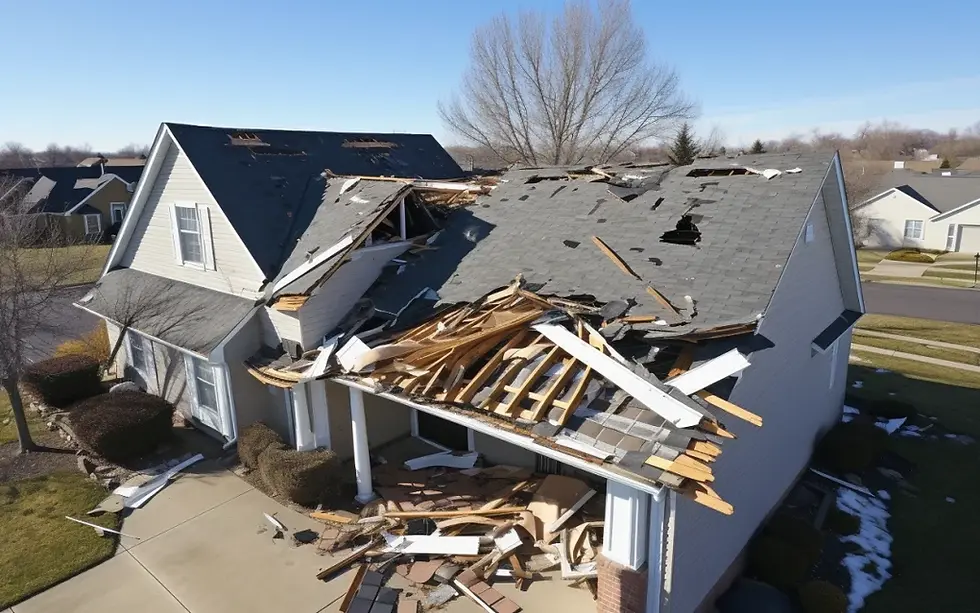



State Farm Litigation and What It Means for Your Roof Claim
If your roof claim was denied after a hailstorm or cut down to a small repair after wind damage, the problem may not be your roof. It may be the way the claim was handled.
Recent litigation involving State Farm has put a spotlight on roof claim practices that many homeowners have complained about for years. Oklahoma Attorney General Gentner Drummond filed a lawsuit alleging that State Farm used an internal “Hail Focus Initiative” to reduce roof replacement approvals and lower claim payments. That case follows hundreds of individual bad-faith lawsuits in Oklahoma, with allegations tied to claims-handling practices that reportedly began in Texas around 2020 before spreading into other states.
The allegations are serious. Court filings and reports have described patterns that include calling storm damage “cosmetic,” saying roofs lack “functional damage,” lowering full replacement claims to spot repairs, and relying on inspection vendors whose conclusions favor smaller payouts.
None of this means every denied claim is wrongful. It also does not mean every insurer acted in bad faith. But it does mean homeowners should pay close attention to the language in their claim letters, the evidence used to deny payment, and the steps available after a low estimate or denial.
This article is for general information only and is not legal advice. If you are dealing with a disputed claim, speak with a qualified attorney or licensed public adjuster in your state.

What the State Farm litigation is about
The Oklahoma lawsuit alleges that State Farm created or used a program focused on reducing roof replacement payments after hail claims. The phrase at the center of many discussions is “Hail Focus Initiative,” which the Oklahoma Attorney General’s lawsuit describes as an internal effort that allegedly changed how roof claims were evaluated.
According to allegations described in public reporting and litigation, the program pushed claims toward smaller scopes of work. That could mean fewer full roof replacements, more partial repairs, and more denials based on the idea that hail damage did not affect the roof’s ability to function.
The broader litigation picture includes:
More than 900 bad-faith lawsuits reportedly filed in Oklahoma against State Farm
Allegations that claims-handling practices began in Texas around 2020
Similar disputes appearing in other states, including Alabama, Illinois, Texas, and Florida
Court fights over internal claim guidelines, vendor practices, and engineering reports
Reports that unsealed documents showed large reductions in payouts while roof storm damage remained widespread
These are allegations, and courts will decide what evidence proves. State Farm and other insurers typically deny wrongdoing in these kinds of cases and argue that claim decisions are based on policy language, inspections, and covered damage.
Still, the lawsuits matter because they bring internal claims-handling practices into public view. Homeowners usually see only the final estimate, denial letter, or adjuster report. Litigation can reveal how those decisions were guided behind the scenes.
Why this matters even outside Oklahoma
A lawsuit in Oklahoma can affect claim handling far beyond Oklahoma.
Large insurance carriers operate across many states. They use shared vendor networks, training materials, claim software, engineering firms, guidelines, and internal review processes. When one state investigates a claims program, other lawyers, regulators, and policyholders start asking similar questions.
That does not mean an Oklahoma lawsuit automatically changes a claim in Alabama, Texas, Florida, Illinois, or any other state. Insurance law is state-specific. Policy language varies. Deadlines vary. Bad-faith standards vary.
But the issues being raised are not limited to one place.
A homeowner in another state may still see the same claim pattern:
A storm hits the neighborhood
Several nearby roofs are replaced
The insurer pays only for a few shingles or slopes
The inspection report says the damage is cosmetic
The estimate ignores matching issues or code requirements
An engineer says the roof has wear, age, or installation defects instead of storm damage
The carrier refuses to reconsider without “new evidence”
That is why this litigation has attracted attention. It speaks to a broader dispute over how insurance companies separate covered storm damage from aging, wear, and maintenance issues.
Carriers also watch each other. When one insurer faces litigation over claim practices, other carriers may review their own procedures. Sometimes that leads to fairer claim handling. Sometimes it leads to more careful denial letters, better documentation, and more polished reports that still reach the same result.
Either way, homeowners benefit from understanding the terms insurers use and the evidence that can challenge them.
The “cosmetic damage” argument is a major battleground
One of the most common phrases in roof claim disputes is cosmetic damage.
In plain English, cosmetic damage means the insurer believes the roof may look marked, dented, scuffed, or bruised, but still works as intended. In a hail claim, an adjuster might say hail marks on shingles, metal vents, gutters, or soft metals do not affect the roof’s function.
That distinction matters because some policies exclude or limit cosmetic damage, especially for metal roofing or exterior surfaces. Other policies may not define cosmetic damage clearly. Some carriers also use the idea even when the policy does not contain a specific cosmetic damage exclusion.
The problem is that roof damage is rarely just about appearance.
A hail strike can displace protective granules on an asphalt shingle. It can bruise the mat beneath the surface. It can shorten the life of the roof, increase water exposure, or create weak points that worsen over time. Wind can break seals, crease shingles, lift edges, or damage fasteners. Some damage may not leak the same day but still reduce the roof’s ability to shed water long term.
That is why the phrase “functional damage” matters so much.
What insurers often mean by functional damage
When a carrier says there is no functional damage, it usually means the company believes the roof still performs its basic job. The roof is not leaking, the shingles are still attached, or the damage does not meet the company’s threshold for replacement.
The homeowner may hear something different.
They may hear that obvious hail strikes do not count. They may hear that a roof must fail completely before the policy responds. They may hear that damage visible across the whole roof is somehow only a visual issue.
Those are very different positions.
A fair claim decision should connect the facts to the policy. If the insurer denies replacement, the letter should explain why the damage is excluded, why it is not covered, or why repair is enough under the policy. A vague reference to cosmetic damage is not the same as a complete explanation.

Why full roof replacements get reduced to spot repairs
Many disputed roof claims come down to scope.
A contractor may inspect the roof and recommend full replacement. The insurer may inspect the same roof and pay for a handful of shingles, a few vents, and minor interior repairs. That gap can be thousands or tens of thousands of dollars.
The disagreement often centers on whether damage is widespread enough to require replacement or localized enough to repair.
Insurers may reduce a claim to spot repairs for several reasons:
They say only one slope has covered damage
They separate old damage from new storm damage
They attribute damage to wear, heat blistering, foot traffic, or poor installation
They say shingles can be replaced individually
They say matching is not required under the policy
They rely on an engineer who finds no storm-created opening
They apply depreciation, deductibles, or policy limitations
Some of those reasons may be valid. Roofs age. Not every mark is hail. Not every missing shingle means a full replacement is owed. Insurance covers sudden and accidental direct physical loss, subject to the policy. It does not cover every condition found on a roof.
The issue is whether the carrier applied those rules fairly.
If similar damage appears across multiple slopes, if nearby homes were damaged by the same storm, if soft metals show clear hail hits, or if shingles cannot be repaired without causing more damage, a small spot-repair estimate may not match the reality of the loss.
Matching and repairability can change the claim
A roof claim is not only about counting damaged shingles. Two other issues often matter.
Matching
If the damaged shingles cannot be matched in color, profile, size, or availability, a repair may leave the roof uneven. State law and policy language affect whether matching supports broader replacement.
Repairability
Some shingles become brittle with age. Trying to lift and replace individual shingles can tear surrounding shingles or break seals. If repairs cannot be made without damaging the roof further, the repair estimate may be unrealistic.
These issues need evidence. A contractor’s short statement may not be enough. Photos, brittle test results, discontinued shingle documentation, manufacturer information, and local code requirements can all help.
The role of engineers and inspection vendors
Engineering reports often carry major weight in disputed roof claims. When an insurer sends an engineer, many homeowners assume the engineer is neutral. Sometimes the report is thorough and fair. Other times, homeowners feel the engineer was hired to support a denial that had already been decided.
Recent litigation has raised questions about vendor incentives, internal guidelines, and claim review practices. Those questions matter because independent-looking reports can shape the entire outcome of a claim.
A typical vendor report may conclude that roof conditions came from:
Age-related wear
Thermal cracking
Manufacturing defects
Installation errors
Mechanical damage
Foot traffic
Prior storms
Long-term deterioration
Those causes often fall outside coverage or limit payment. If the report also says hail or wind did not create functional damage, the insurer may deny most of the claim.
That does not mean the report is correct. It also does not mean it is wrong. The point is that a homeowner should read it carefully.
Look for gaps such as:
No clear storm date analysis
Few or no close-up photos of the disputed areas
Failure to inspect all slopes
No discussion of nearby storm data
No explanation of why similar marks are not hail damage
Conclusions that repeat policy language without connecting it to observed facts
Statements that ignore interior leaks, lifted shingles, or damaged roof accessories
A strong report explains the reasoning. A weak report asks you to accept the conclusion without enough support.
What to do if your roof claim was denied or underpaid
A denial letter is not always the end of a roof claim. Many claims change after better documentation, a reinspection, appraisal, mediation, or legal review.
Start by getting organized. You need the full claim file as much as your state allows, not just the estimate.
Ask for copies of:
The adjuster’s photos
The adjuster’s estimate
Any engineering or consultant report
Notes or letters explaining the coverage decision
The policy and all endorsements
Any depreciation calculation
Any code upgrade or ordinance review
Any prior claim information the insurer relied on
Then compare the insurer’s position with your own evidence.
A helpful claim package often includes:
Clear roof photos by slope
Close-ups of hail hits, creased shingles, missing shingles, damaged flashing, and damaged vents
Photos of gutters, downspouts, screens, fences, siding, and soft metals
Interior leak photos, if any
A contractor estimate with line items
A written explanation of why repair is not enough
Weather data tied to the date of loss
Neighboring property damage, if relevant
Product availability or discontinued shingle information
Local code issues that affect replacement
Do not rely only on broad statements like “the roof is totaled.” Insurers respond better to specific evidence.
A stronger response says which slopes are damaged, what kind of damage exists, why the damage is storm-related, why spot repair will not work, and what policy benefits are being requested.
Keep communication in writing
Phone calls are useful, but written records are better. After a call, send a short email or message through the claim portal summarizing what was discussed.
For example:
“Thank you for speaking with me today. My understanding is that the claim remains denied because the carrier believes the hail marks are cosmetic and do not affect roof function. Please confirm whether the policy contains a cosmetic damage exclusion and identify the specific policy language being applied.”
That kind of message does two things. It creates a record, and it asks the insurer to connect its decision to the policy.
If the carrier says no functional damage exists, ask what definition it is using. If it says repair is possible, ask whether it considered shingle brittleness, matching, local code, and manufacturer requirements.
Common claim language and what it may mean
Insurance letters can sound final even when they leave important questions unanswered. The table below explains common phrases and the follow-up questions they raise.
Claim language | What it may mean | What to ask next |
“No functional damage observed” | The insurer believes the roof still performs as intended | What definition of functional damage is being used, and where is it found in the policy? |
“Damage is cosmetic only” | The insurer sees visible marks but says coverage is limited or not triggered | Does the policy contain a cosmetic damage exclusion, and does it apply to this roof material? |
“Wear and tear” | The carrier attributes roof conditions to age or maintenance | What evidence separates age-related damage from storm-created damage? |
“Repair is appropriate” | The estimate assumes damaged shingles can be replaced individually | Did the carrier test repairability and matching? |
“No storm-created opening” | The insurer may be denying interior water damage | Is an opening required under the policy for this type of loss? |
“Prior damage” | The carrier believes the damage came from an earlier event | What prior claim, inspection, or weather data supports that conclusion? |
The goal is not to argue every phrase. The goal is to make the decision clear enough that it can be reviewed.

How litigation trends can influence your claim
The State Farm cases may affect roof claims in several ways, even before courts reach final decisions.
First, policyholders and attorneys may challenge “cosmetic” and “functional damage” conclusions more often. Those phrases are no longer treated as simple technical terms. They are now part of a larger debate over whether insurers used them to reduce payments unfairly.
Second, courts may require more internal documents in certain cases. The Alabama dispute mentioned in recent reporting is one example where a court ordered State Farm to turn over internal claims-handling materials in a roof claim fight. Discovery rulings like that can matter because they show what information may be relevant when a denial is challenged.
Third, regulators may look more closely at claim patterns. A single denied claim may seem isolated. Hundreds of similar lawsuits can suggest a broader practice that deserves review.
Fourth, carriers may tighten documentation. That can help when claim decisions become clearer and better supported. It can hurt if denial letters become more polished without becoming more fair.
For homeowners, the lesson is simple. Treat every disputed relationship between damage, coverage, and repair scope as an evidence question.
A carrier should not deny a roof claim through vague wording. A contractor should not demand replacement without proof. The claim should turn on the policy, the facts, the damage, and the applicable law.
When to request a reinspection
A reinspection can make sense when new information exists or when the first inspection missed important damage.
Good reasons to request one include:
The adjuster inspected in bad weather or poor lighting
The adjuster did not access all roof slopes
The estimate missed damaged vents, flashing, gutters, or soft metals
Interior leaks appeared after the first inspection
Your contractor found damage that was not included
The insurer’s report contains factual errors
The carrier relied on the wrong roof material, roof age, or storm date
Repairability or matching was not considered
Send the request in writing. Attach photos and a contractor estimate. Ask the insurer to have the field adjuster meet your contractor on-site if possible.
Keep the tone firm and factual. Anger rarely helps the claim file. Specific evidence does.
When appraisal may help
Many property policies include an appraisal provision. Appraisal is a process used to resolve disputes over the amount of loss. It usually does not decide whether the claim is covered. It focuses on price, scope, and value.
Appraisal may help when both sides agree there is covered damage but disagree about how much it costs to repair or replace. It may be less useful when the carrier denies coverage altogether.
The exact rules depend on your policy and state law. Some states limit appraisal in certain disputes. Some policies have strict deadlines or procedures. Before invoking appraisal, read the policy and get advice if the dollar amount is significant.
Appraisal can be faster than litigation, but it is not risk-free. Each side typically pays its own appraiser, and both sides may share the umpire cost. The award may also be binding.
When to talk to a lawyer or public adjuster
Some claims can be resolved with better photos and a reinspection. Others need professional help.
Consider speaking with a qualified attorney or licensed public adjuster if:
The claim denial relies on broad “cosmetic damage” language
The insurer refuses to provide a clear policy basis
The carrier ignored your contractor’s evidence
An engineer report contains errors or unsupported conclusions
The estimate is far below the cost of real repairs
The roof has active leaks and the claim is stalled
The insurer missed deadlines required by your state
The claim involves a large loss, bad-faith concerns, or repeated denials
A public adjuster can help document and estimate the claim. An attorney can advise on legal rights, bad faith, appraisal, deadlines, and litigation. In some states, public adjusters cannot interpret coverage or give legal advice. In others, attorney involvement may be necessary once the dispute centers on policy interpretation or bad faith.
Do not wait too long. Property policies often contain deadlines for proof of loss, appraisal, suit, replacement cost recovery, and supplemental claims. State law may add other limits.

What this means for your next roof claim
The safest approach is to build the claim as if someone else may need to review it later. That could be a claims supervisor, appraiser, regulator, attorney, judge, or jury.
After a hail or wind event, take these steps as early as possible:
Photograph the property before temporary repairs
Include the roof if it can be done safely, plus gutters, siding, fences, windows, screens, AC units, and interior leaks.
Save damaged materials
If emergency repairs are needed, keep samples when possible. Photograph everything before removal.
Report the claim promptly
Late notice can create avoidable disputes.
Get a detailed contractor inspection
Ask for photos by slope, not just a total replacement price.
Read the policy endorsements
Look for cosmetic damage exclusions, roof surface payment schedules, actual cash value limitations, matching language, code coverage, and wind or hail deductibles.
Compare estimates line by line
A low estimate may omit tear-off, underlayment, drip edge, flashing, ventilation, steep charges, high charges, code items, or overhead and profit where applicable.
Challenge vague conclusions
If the carrier says the damage is cosmetic, ask for the policy language and factual basis.
Watch deadlines
Calendar every date in the policy and every date given by the insurer.
The State Farm litigation does not guarantee a different outcome for any individual claim. But it does give homeowners a stronger reason to question claim decisions that rely on thin explanations, repeated phrases, or inspection reports that do not match the visible damage.
The main takeaway
Roof claims are won or lost on details. The current litigation against State Farm has brought national attention to claim-handling practices that many homeowners already recognized: storm damage being minimized, replacement estimates being reduced to small repairs, and technical phrases being used to deny payment.
If your roof claim was denied or underpaid, do not assume the first answer is the final answer. Ask for the policy language. Request the reports. Document the damage. Get a qualified second opinion. Put every important conversation in writing.
A fair claim decision should be based on the roof, the storm, the policy, and the evidence, not on a claims program designed to pay less.


Comments