.jpg)



Why 44% of Homeowners Insurance Claims Went Unpaid Last Year
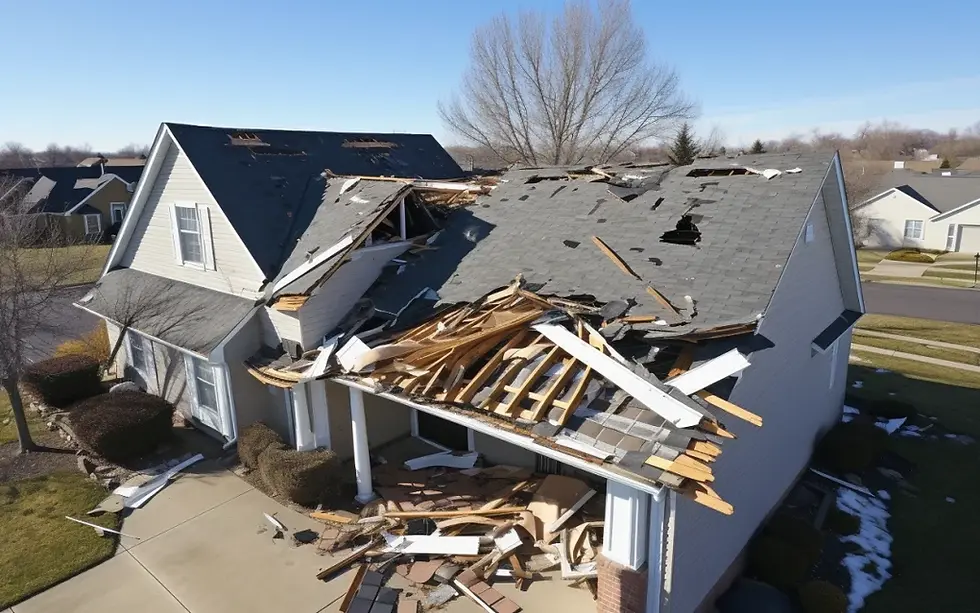
More than 4 in 10 resolved homeowners insurance claims at the country’s five largest home insurers ended with no payment last year, according to a Wall Street Journal analysis.
That finding deserves attention because it is not about one bad storm, one lawsuit, or one angry policyholder. The analysis looked at the five largest home insurers, Allstate, Farmers, Liberty Mutual, State Farm, and USAA, and found they did not pay out on more than 44% of resolved claims last year. A decade earlier, that figure was 36%.
That does not mean every unpaid claim was wrongly denied. Some claims fall below the deductible. Some are excluded by the policy. Some are withdrawn. Some lack enough documentation.
But the trend still raises a practical question every homeowner should ask before accepting a denial or a $0 outcome:
Has anyone outside the insurance company reviewed the claim?

The 44% number matters because it is industry-wide
Insurance disputes often get framed as isolated stories. A homeowner says the carrier underpaid. The insurer says it followed the policy. Both sides point to the facts of that one claim.
The Wall Street Journal analysis is different because it zooms out.
It looked across the largest players in the homeowners insurance market. These are household-name carriers with enormous claim systems, long underwriting histories, and large policyholder bases across the U.S.
The reported shift from 36% unpaid a decade ago to more than 44% unpaid last year suggests something broader is happening. More claims are ending without money reaching the homeowner.
That is the data story.
It does not prove that insurers are acting improperly in every case. It does show that a homeowner who receives a denial is not an outlier. A $0 claim decision has become common enough that it should be treated as a checkpoint, not the end of the road.
“Unpaid” does not always mean “denied”
One reason the 44% number can be confusing is that unpaid claims do not all look the same.
A claim can end with no payment for several reasons:
The carrier denies coverage.
The damage falls below the deductible.
The homeowner withdraws the claim.
The insurer says the cause of loss is excluded.
The claim is closed because requested information was not provided.
The damage is real, but the insurer classifies it as wear and tear, maintenance, or pre-existing deterioration.
The policy covers part of the loss, but not enough to exceed the deductible.
Those differences matter.
A claim closed with no payment after a small window repair is not the same as a denied roof claim after a hailstorm. A claim withdrawn because the deductible is too high is not the same as a claim denied after an inspection.
Still, from the homeowner’s point of view, the result is the same: no money.
That is why the first step is not to assume bad faith or accept the decision without question. The first step is to understand which kind of unpaid claim you are dealing with.
Why more claims may be ending without payment
There is no single reason unpaid claim rates could rise across major carriers. Several pressures are hitting homeowners insurance at the same time.
Deductibles are doing more of the work
Many homeowners now carry higher deductibles than they realize, especially for wind, hail, hurricane, or named storm losses. In some policies, the deductible is not a flat dollar amount. It can be a percentage of the dwelling coverage.
That matters.
A claim can involve real damage, a real covered event, and a real repair estimate, but still result in no payment because the covered amount does not clear the deductible.
For example, if a covered repair is estimated at $3,200 and the deductible is $5,000, the claim may close unpaid. The homeowner may feel denied, but the insurer may treat it as a below-deductible claim.
That outcome is frustrating, especially when the homeowner pays premiums for years. But it is also a reminder to review the deductible before a loss happens, not after.
Policy exclusions can be difficult to spot
Homeowners policies cover many sudden and accidental losses. They do not cover every problem that affects a house.
Common claim disputes often involve the cause of damage. The same visible problem can have very different coverage outcomes depending on what caused it.
A stained ceiling could come from a sudden plumbing leak, long-term seepage, roof wear, storm-created opening, or poor maintenance. A cracked foundation could involve soil movement, water pressure, construction issues, or a covered event in rare cases.
The carrier’s decision often turns on that cause.
That is where homeowners can get stuck. They see damage. The insurer sees policy language.
If the denial letter uses words like `wear and tear`, `deterioration`, `faulty workmanship`, `earth movement`, `seepage`, or `maintenance`, the policy may contain an exclusion the carrier is relying on.
That does not automatically make the denial correct. It does mean the claim needs a closer look.

Documentation gaps can sink otherwise valid claims
A homeowners claim is not only about what happened. It is also about what can be proven.
Insurance companies often need:
Photos of the damage
The date of loss
A clear description of what happened
Repair estimates
Inspection reports
Receipts for emergency work
Proof that the damaged property existed
Records showing the condition before the loss
When that information is missing, unclear, or inconsistent, the claim becomes easier to deny or close without payment.
This is especially true with losses discovered days or weeks after the event. Water damage, roof leaks, mold concerns, and hidden structural damage can all raise questions about timing.
The insurer may ask whether the damage came from one covered event or developed over time. Without documentation, the homeowner may have trouble answering.
Insurers are under cost pressure
Home insurance has become more expensive for both policyholders and carriers. Severe weather, rising repair costs, inflation in building materials, labor shortages, and increased catastrophe exposure have all strained the system.
When claim costs rise, insurers look more closely at coverage, estimates, deductibles, and causation. They may also use more detailed inspection processes and stricter documentation requirements.
That scrutiny can be fair. Insurance companies have a duty to investigate claims and pay only what the policy covers.
But stricter claim handling can also create more friction for homeowners. A claim that might have been paid quickly years ago may now face more questions, more inspections, or a narrower interpretation of damage.
The result can be a higher unpaid rate without any single dramatic change in policy language.
The denial letter is the beginning of the review, not the end
A denial letter can feel final. It usually sounds formal. It quotes policy language. It may list exclusions. It may say the carrier’s investigation is complete.
But a denial is still a claim decision made from the information the carrier had at that time.
That means it can be challenged, clarified, corrected, or supplemented.
Before accepting a denial, a homeowner should read the letter for three things.
What exact reason did the insurer give?
A good denial letter should explain the basis for the decision. Look for the specific cause listed.
Did the insurer say the damage was not covered? Did it say the amount fell below the deductible? Did it say the loss happened before the policy period? Did it say the policyholder failed to provide requested documents?
Those are different problems with different next steps.
What policy language did the insurer cite?
Most denial letters quote or refer to policy sections. Read the cited language in the full policy, not only the excerpt in the letter.
Pay close attention to definitions, exclusions, exceptions to exclusions, conditions, endorsements, and deductibles.
Sometimes coverage exists in one section, gets limited in another, and then gets partially restored by an exception or endorsement. That is why reading only one paragraph can be misleading.
What facts did the insurer rely on?
A denial often depends on the insurer’s version of the facts.
For example:
The roof damage was old.
The leak occurred over a long period.
The broken pipe was caused by freezing due to lack of heat.
The foundation cracking was caused by settlement.
The claimed damage was cosmetic only.
The repair estimate included upgrades not covered by the policy.
If those facts are wrong or incomplete, the decision may be wrong too.

The numbers homeowners should know before filing a claim
The 44% unpaid figure is the headline. But the most useful numbers are the ones connected to a specific home and policy.
Before filing, accepting, or walking away from a claim, homeowners should know these numbers.
The deductible
Find the deductible that applies to the specific type of loss. Do not assume the standard deductible applies to wind, hail, hurricane, earthquake, or flood-related damage.
A policy can have more than one deductible.
The dwelling limit
This is the Coverage A limit. It affects how much insurance is available to repair or rebuild the home.
It also matters when a percentage deductible applies.
The date of loss
The date of loss drives deadlines, coverage periods, and the insurer’s investigation. If the exact date is unknown, document when the damage was discovered and what event may have caused it.
The repair estimate
A contractor’s quote, a public adjuster’s estimate, or an independent scope can help compare the insurer’s number against real repair costs.
The estimate should separate covered damage from upgrades, unrelated repairs, or maintenance items.
The actual cash value and replacement cost difference
Some policies first pay actual cash value, which accounts for depreciation. Replacement cost benefits may come later, after repairs are completed and documented.
A claim may look underpaid if the homeowner does not understand which value the insurer used.
The deadlines in the policy
Policies often include duties after loss and time limits for submitting proof of loss, filing suit, demanding appraisal, or completing repairs for replacement cost benefits.
Missing a deadline can weaken a claim, even when the damage itself is covered.
Why outside review can change the outcome
The strongest lesson from the unpaid-claims data is simple: homeowners should not rely only on the carrier’s first answer when the stakes are meaningful.
That does not mean every denied claim should turn into a fight. It means the decision should be checked by someone who understands policy language, damage documentation, and claim procedures.
That review might come from:
A licensed public adjuster
An attorney who handles insurance disputes
A qualified contractor for repair scope and pricing
An engineer or specialist for disputed causation
A state insurance department resource for general guidance
The right help depends on the claim. A small below-deductible claim may not justify hiring anyone. A denied roof, fire, water, or structural claim often deserves a second set of eyes.
Professional review can help answer key questions:
Did the insurer apply the right deductible?
Did the carrier inspect all reported damage?
Did the denial rely on the correct policy section?
Is there evidence that supports a covered cause of loss?
Are repair costs priced accurately?
Did the insurer miss code upgrades, hidden damage, or related repairs?
Is appraisal, reconsideration, or legal action available?
The goal is not to create conflict for its own sake. The goal is to avoid leaving covered benefits on the table because a decision sounded final.
A practical checklist after a $0 claim decision
If a homeowners claim ends unpaid, take a breath before responding. Then get organized.
Use this sequence.
Save the denial or closure letter
Keep the full letter, envelope, claim number, and any email communication.
Request the claim file if available
Ask what documents, photos, estimates, and reports the insurer relied on.
Compare the letter to the policy
Read the cited sections in context. Look for endorsements that modify the standard language.
Document the damage again
Take clear photos and videos. Include wide shots, close-ups, measurements, and dates.
Get a repair estimate
Ask for a written scope that explains what needs to be repaired and why.
Write down the timeline
Note when the loss happened, when it was discovered, when it was reported, and what steps were taken to prevent further damage.
Ask the insurer specific questions
Avoid vague complaints. Ask what evidence would change the decision, what policy language controls, and whether reconsideration is available.
Get an outside review when the amount matters
If the damage is significant, do not rely only on the company’s explanation.

What the 44% figure should change
The Wall Street Journal’s analysis gives homeowners a useful benchmark. When more than 44% of resolved claims at the largest carriers end unpaid, a denial should not be treated as rare or automatically reliable.
It should be treated as a decision that deserves review.
Some unpaid claims are correct under the policy. Some are below the deductible. Some lack support. But some are unpaid because the damage was misunderstood, the documentation was thin, the estimate was incomplete, or the policy was read too narrowly.
The best protection is not panic. It is preparation.
Know the deductible. Know the exclusions. Know the deadlines. Keep records. Take photos before and after major weather events when possible. Read every claim letter carefully. If the claim matters financially, get another qualified person to look at it before accepting a $0 result.
This article is for general information only and is not legal, financial, or insurance advice. For guidance on a specific claim, consult a qualified professional in your state.



Comments