.jpg)



Why Insurance Companies Resist Paying Claims and How to Protect Your Rights
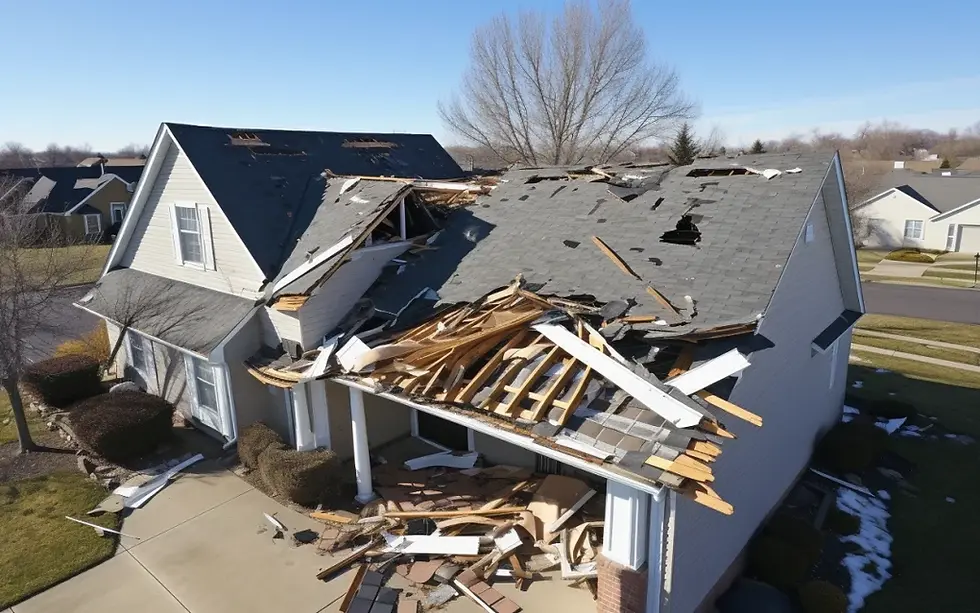
A denied or delayed insurance claim can feel personal. A tree falls through a roof, a basement floods, a driver rear-ends your car, and the company that promised protection suddenly asks for more forms, more proof, and more time.
Insurance companies do pay many valid claims. The industry exists to spread risk, and policyholders rely on that promise every day. Still, the claims process often feels stacked against the person who paid the premiums. That perception is not imaginary. It comes from how insurance policies are written, how claims departments control costs, and how insurers interpret coverage when the facts are messy.
This guide explains why claims get delayed, reduced, or denied, plus what can be done to protect your rights. It is informational only and not legal advice. For a specific dispute, a licensed attorney or public adjuster can review the policy and facts.

Insurance companies are built to manage risk and control losses
Insurance is a business model based on collecting premiums, estimating risk, investing reserves, and paying covered claims. That last word matters: covered.
A policy is not a general promise to fix every loss. It is a contract with limits, exclusions, conditions, and deadlines. When a claim comes in, the insurer’s job is not only to pay. It also investigates whether the claim fits within the contract.
That creates a built-in tension.
The policyholder wants fast help. The insurer wants proof, documentation, and a reason to classify the loss correctly. If the claim is large, unusual, or open to interpretation, the process can become slow and adversarial.
The scale is huge. The Insurance Information Institute has reported that roughly one in 20 insured homes has a claim in a typical year. Across auto, property, health, life, and liability insurance, insurers handle millions of claims annually. Even small differences in how claims are valued can add up to significant money for carriers.
That does not mean every denial is bad faith. Some claims fall outside coverage. Some losses are under the deductible. Some damage happened before the policy period. But when a company has a financial incentive to pay less, policyholders should pay close attention to the details.
Complex policy language creates confusion and leverage
Many claim disputes begin before the loss ever happens, with policy language that most people do not read closely until they need it.
Insurance policies often include terms such as:
Actual cash value
Replacement cost value
Exclusions
Endorsements
Duties after loss
Covered peril
Reservation of rights
Anti-concurrent causation
These terms can change the outcome of a claim.
For example, a homeowner may believe a policy will pay for a new roof after storm damage. The insurer may say the policy pays only the actual cash value, which subtracts depreciation for age and wear. A roof that costs $18,000 to replace might be valued much lower if it is 18 years old.
Another common example involves water damage. A sudden burst pipe is often treated differently from long-term seepage or flooding from outside water. After Hurricane Katrina, many policyholders discovered that wind damage and flood damage were handled under different rules. Wind might be covered under a homeowners policy, while flood damage often required a separate flood policy.
That distinction led to major disputes because a destroyed home could show signs of both wind and flood damage. Who decides which force caused which part of the loss? Often, the insurer’s adjuster makes the first call.
Policy complexity gives insurers an advantage because they work with these contracts every day. Most consumers do not.

Delays can wear down policyholders
Claims often move slowly for legitimate reasons. An insurer may need photographs, repair estimates, police reports, medical records, recorded statements, inspections, or expert reviews. Large storms can also create a surge of claims that overwhelms local adjusters.
Still, delay is one of the most common reasons people feel insurers resist payment.
A delay can happen when an insurer:
Requests documents one at a time instead of all at once
Assigns multiple adjusters to the same file
Waits weeks to schedule inspections
Asks for repeated recorded statements
Sends unclear letters about missing information
Keeps a claim open without making a firm decision
Delays matter because losses create cash pressure. A family may need temporary housing. A business may be losing revenue. A driver may need a rental car. A homeowner may need emergency repairs before more damage occurs.
For example, after a severe windstorm, a homeowner reports roof damage right away. The insurer sends an adjuster two weeks later. The adjuster asks for a contractor estimate. The contractor is booked for another two weeks. Then the insurer requests interior photos and proof of prior roof maintenance. By the time the company makes an offer, six or seven weeks may have passed, and the homeowner has paid out of pocket to prevent leaks from spreading.
Every state has unfair claims settlement rules, though timelines and enforcement vary. Many states require insurers to acknowledge claims promptly, investigate within a reasonable time, and explain denials in writing. “Reasonable” can still leave room for disagreement.
The practical point is simple: silence helps the insurer more than it helps the policyholder. A well-documented paper trail makes delay harder to justify.
Payouts can be reduced through valuation tactics
Insurance companies do not always deny claims outright. More often, the dispute is about the amount.
Here are common ways payouts get reduced.
Depreciation lowers the first check
With property claims, insurers may calculate actual cash value by subtracting depreciation. That means the first payment may be far less than the repair or replacement cost.
If the policy includes replacement cost coverage, the insurer may release the recoverable depreciation only after repairs are completed and invoices are submitted. Many policyholders miss this step and leave money unclaimed.
The deductible is applied in ways people do not expect
A deductible is the amount the policyholder must absorb before insurance pays. Some policies have special deductibles for hurricanes, wind, hail, or named storms. These may be a percentage of the insured value rather than a flat dollar amount.
A 2% wind deductible on a $400,000 home is $8,000. That can surprise someone who expected a $1,000 deductible.
Repair scope may be narrowed
An insurer may agree that damage occurred but disagree on how much work is needed. For example, it may pay to replace a few shingles while the contractor says the roof slope cannot be properly matched or repaired that way.
The same issue appears in auto claims. An insurer may write an estimate using aftermarket parts while the vehicle owner or repair shop argues for original equipment manufacturer parts, depending on the policy and state rules.
Exclusions shift the loss outside coverage
Exclusions are one of the most powerful tools in a claim dispute. Wear and tear, faulty workmanship, mold, earth movement, flood, intentional acts, and business use exclusions can all affect coverage.
A fallen tree shows how detailed this can get. If a tree falls because of wind and damages a roof, the structure damage is often treated differently than a tree that falls in a yard without hitting covered property. Cleanup, debris removal, and tree removal limits may all have separate rules. A person searching for insurance, Massachusetts, Rhode Island, Connecticut, tree removal, tree claim will quickly see how state law, policy language, and the facts of the loss can change the answer.

Claimants may face pressure to settle early
A fast offer can feel like relief. Sometimes it is fair. Other times, it is a starting point.
Early settlement pressure can show up in several ways:
A quick low offer before the full damage is known
A request to sign a release
A statement that the offer is the “final” amount
A warning that delays could hurt the claim
A suggestion that hiring help will only reduce the payout
This is common in injury claims. After a car crash, an insurer may offer settlement before the injured person knows the full medical outlook. Once a release is signed, it can be difficult or impossible to reopen the claim.
Property claims can work the same way. A homeowner may accept a check for visible damage, then discover hidden water intrusion weeks later. If the claim was closed too quickly, reopening it may require more effort, more documentation, and sometimes a dispute over whether the later damage was related.
The key is to understand what a payment means. A check may be an advance, an undisputed payment, or a full and final settlement. Those are very different things.
Before signing anything, read it carefully. If the language says “release,” “full settlement,” “all claims,” or “final payment,” consider getting advice.
Some denials are based on investigation gaps
Insurers often deny claims because they say the policyholder failed to prove the loss. That can happen even when the damage is real.
Common investigation gaps include:
No photos before repairs began
No receipts for damaged property
No proof of ownership
Missed deadlines
Failure to protect the property from further damage
Incomplete medical records
Conflicting statements about what happened
For instance, after a kitchen fire, a family may throw out smoke-damaged appliances and furniture before photographing them. Later, the insurer asks for proof of damage and value. Without photos, receipts, serial numbers, or a contractor report, the insurer may reduce payment.
This is why documentation matters from day one.
A strong claim file should include:
Photos and videos from multiple angles
Date and time of the loss
A short written timeline
Receipts, invoices, and estimates
Names of adjusters and claim representatives
Copies of all letters and emails
Notes from phone calls
Proof of temporary repairs or emergency mitigation
For phone calls, write down the date, the person’s name, and what was said. If a claim later becomes disputed, those notes can help show a pattern of delay or inconsistent explanations.
What policyholders can do to protect their rights
The claims process feels less intimidating when it is treated like a record-keeping project rather than a conversation.
Read the denial or estimate closely
Do not stop at the dollar amount. Look for the policy sections the insurer cites. A proper denial should explain the reason and identify the contract language used.
If the explanation is vague, ask for clarification in writing.
Ask for the full claim file where allowed
Some states allow policyholders to request parts of the claim file. Even when the full file is not available, you can ask for estimates, photos, engineering reports, adjuster notes that can be shared, and the basis for any depreciation.
Get your own estimate
A contractor, mechanic, public adjuster, or specialist may identify damage the insurer missed. The strongest competing estimate explains the scope clearly and ties each repair to the covered event.
A one-line estimate is easy to dismiss. A detailed estimate with photos is harder to ignore.
Meet deadlines
Policies often require prompt notice, sworn proof of loss forms, exams under oath, or cooperation with the investigation. Missing a deadline can give the insurer a defense.
If more time is needed, ask for an extension in writing.
Escalate when needed
If the claim stalls, ask for a supervisor review. If that does not work, consider filing a complaint with the state insurance department. State regulators do not usually act as personal attorneys, but a complaint can force the insurer to respond and explain its position.
For larger claims, repeated delays, suspicious denials, or serious injuries, legal advice may be appropriate.

Red flags that a claim may need outside help
Not every disagreement requires a lawyer or public adjuster. Many claims can be resolved with better documentation and persistence.
Still, certain red flags should be taken seriously:
The insurer denies coverage without explaining the policy basis
The adjuster ignores evidence from contractors or experts
The company changes its reason for denial
Payment is delayed after coverage is accepted
The claim involves major structural damage
The insurer pressures you to sign a release
You are asked to give a recorded statement after a serious injury
The settlement offer does not cover known repairs or medical costs
Bad faith insurance laws vary by state, but the basic idea is that insurers must handle claims fairly and honestly. A company does not have to pay every claim, but it usually must investigate properly, communicate clearly, and give a reasonable explanation for its decision.
The best protection is preparation and persistence
Insurance companies may seem reluctant to pay claims because the system gives them control over the first interpretation of the policy, the first damage estimate, and the pace of the process. Complex language, delay, depreciation, exclusions, and early settlement pressure can all reduce what a policyholder receives.
The best response is not panic. It is documentation.
Read the policy. Save every message. Photograph everything. Ask questions in writing. Do not sign a final release until the full loss is understood. If the explanation does not make sense, push for a clearer answer.
A claim is not just a request for money. It is a contract dispute waiting to be proven. The more organized the proof, the harder it becomes for an insurer to ignore what is owed.



Comments