



Ice Dam Claims After the Blizzard of 2026: What Massachusetts Homeowners Should Know Before Accepting the Carrier's Estimate
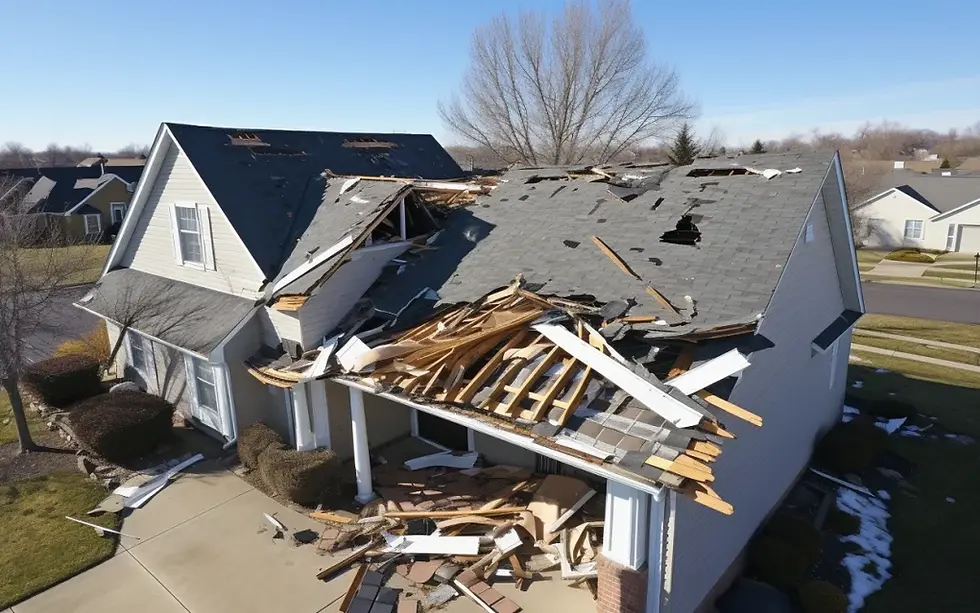
Eight months have passed since the Blizzard of 2026, and many Massachusetts homeowners are still living with the damage it left behind. The storm hit on February 22–23 and buried parts of the South Coast under record snowfall — 37 inches in New Bedford and 41 inches in Fall River — and February temperatures stayed well below freezing for days afterward. That combination of deep snowpack and a long freeze is the classic recipe for ice dams.
I am currently representing a homeowner in Plymouth County whose house took on water through the roof edge in the days after the storm. His experience is a good illustration of what I am seeing across the region, and of why the first estimate a carrier writes is rarely the last word on an ice dam claim.
How an ice dam turns into an interior loss
An ice dam forms when snow on the upper roof melts, runs down to the colder eaves, and refreezes into a ridge of ice. The meltwater behind that ridge has nowhere to go, so it backs up under the shingles and finds its way into the attic, the exterior walls, and the ceilings below. By the time a homeowner sees a stain or hears a drip, water has often been traveling inside a wall cavity for days.
In my client's home, the water came in over a bathroom and laundry area. What looked at first like ceiling staining turned out to involve saturated wall cavities, compromised plaster, and water that had migrated into the floor system.
Is ice dam damage covered in Massachusetts?
In most cases, yes. A standard Massachusetts homeowners policy (HO-3) insures the dwelling on an open-perils basis, meaning a loss is covered unless the policy specifically excludes it. Water damage to the interior and exterior of the home caused by an ice dam is generally covered, subject to your deductible and limits. What is typically not covered is the cost of simply removing snow or ice from the roof when there is no resulting damage.
Massachusetts homeowners also have a regulatory history worth knowing. After the brutal winter of 2015, when ice dams drove close to a billion dollars in insured losses in the state, the Division of Insurance rejected a carrier's request to impose a special $10,000 ice dam deductible. Ice dam damage is treated like any other covered water loss under your policy.
Where carrier estimates fall short
Coverage is usually not the fight on these claims. Scope is. In the Plymouth County claim, the carrier's initial estimate looked reasonable on paper but left out much of what it actually takes to put the home back together. These are the gaps I see most often:
Patch-and-paint instead of a proper tear-out. When water has run through a wall cavity, the wet insulation and plaster have to come out so the framing can dry and be inspected. An estimate that only paints over a stain leaves moisture, and potential mold, behind the wall.
The roof deferred or left out. Carriers often pay for the interior while holding the roof "pending inspection." If the ice dam lifted shingles or compromised the underlayment and flashing at the eaves, that damage is part of the same loss.
Wrong materials for the region. Many older Massachusetts homes are built with blueboard and veneer plaster, not standard drywall. Pricing the repair as drywall understates the cost of matching what was there.
Flooring and matching. Continuous flooring that runs from the damaged room into adjoining rooms often cannot be replaced in one room alone without leaving a visible mismatch. The scope needs to address the full continuous area.
Plumbing, cabinets, and fixtures. A bathroom or laundry repair frequently requires disconnecting and resetting fixtures, cabinets, and supply and drain lines. Those steps are real labor and belong in the estimate.
General contractor overhead and profit. When a repair requires a roofer, a plumber, a plasterer, a flooring installer, and a painter, a general contractor is needed to coordinate them. Overhead and profit should be included when that level of coordination is reasonably required.
Code upgrades and permits. Repairs to roofing, plumbing, and electrical work may trigger current building code requirements. Check your policy's ordinance or law coverage.
Additional living expense. If a bathroom is gutted or the home is not livable during repairs, your policy's loss of use coverage may pay for the added cost of staying elsewhere.

What to do if you have an open ice dam claim
Photograph everything, including the roof edge, attic, ceilings, and any opened walls. Keep every invoice for emergency mitigation and drying. Get a written repair estimate from a licensed contractor who has actually walked the job. And read the carrier's estimate line by line against what you see in your home — not just the bottom line.
Massachusetts law (G.L. c. 176D) requires insurers to conduct a reasonable investigation and to attempt in good faith to effectuate prompt, fair, and equitable settlements. You are entitled to a full explanation of how your claim was scoped and priced.
Time limits matter too. Most Massachusetts homeowners policies require any lawsuit on a claim to be brought within two years of the date of loss, and many replacement cost policies set a deadline to complete repairs and claim the withheld depreciation. For a February 2026 blizzard loss, those clocks are already running.
How a public adjuster can help
A licensed public adjuster works for you, not the insurance company. I document the damage, build a complete room-by-room scope of loss, compare it against the carrier's estimate, and negotiate the difference. In the Plymouth County claim, that work turned a patch-and-paint estimate into a full scope covering the roof, the bathroom and laundry, the flooring, and the general conditions needed to complete the repair.
If you are still dealing with ice dam damage from the Blizzard of 2026, or you believe your settlement did not cover the full cost of repair, I am glad to review your claim.
Alfred Smith, CPCU, AIC, AIM, ARM Alfred Smith CPCU Claims Services LLC Licensed Public Adjuster — Massachusetts, Rhode Island, Connecticut 150 Quequechan Road, Taunton, MA 02780 617-697-2646 · alfredsmithcpcu@gmail.com · alfredsmithcpcu.com
This post is for general information only and is not legal advice. Coverage depends on the specific terms of your policy and the facts of your loss.


Comments