



Rhode Island Roof Leak Claim Denied Then Settled After Reconsideration
A denied roof leak claim can feel final, especially when the denial letter points to a policy exclusion. In this Rhode Island roof leak claim, the carrier denied interior water damage under a Water Damage exclusion after flashing on a newer roof failed. The homeowner had water damage inside the home, including damage to a unit rented to a family member.
On paper, it looked like the claim was over.
It wasn’t.
This claim changed because the facts were organized, the denial was challenged in writing, and every carrier response was documented. The key issue was not just that water entered the home. The key issue was how and why the water entered, and whether the carrier’s stated reason for denial actually matched the policy and the facts.
This article is for general informational purposes only. Insurance coverage depends on the specific policy language, facts, and state law involved.

The denial started with a water damage exclusion
The homeowner called after the insurance company had already denied the claim. A section of roof flashing had failed. The roof itself was fairly new, which made the denial even more frustrating for the homeowner.
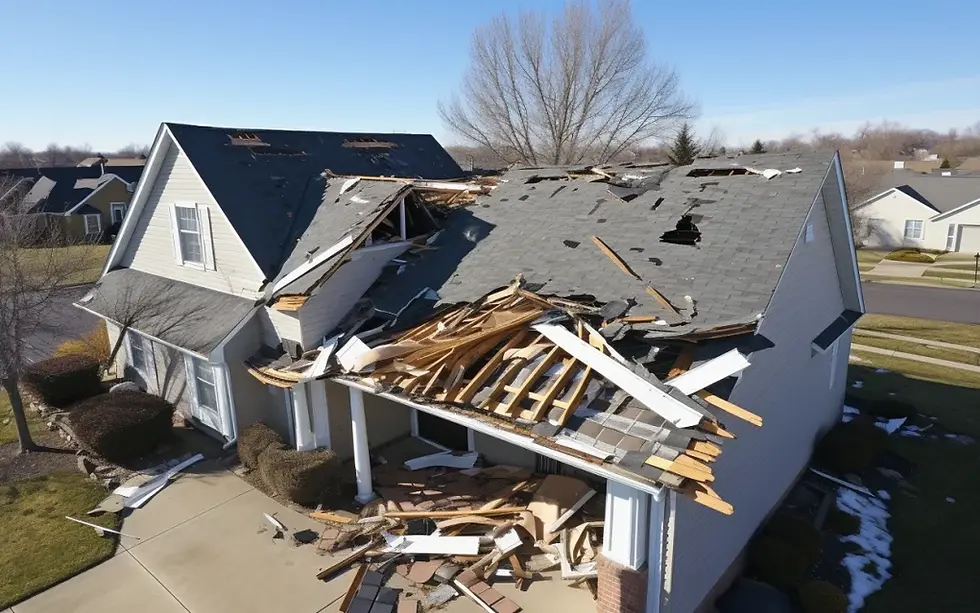
Rain entered through the compromised flashing. Once inside, it damaged the interior of the home. The loss also affected a rental unit occupied by a family member, which created more urgency. This was not a minor stain that could wait. It was damage inside a lived-in home.
The carrier denied the claim under the policy’s Water Damage exclusion.
That kind of denial can sound broad. Many homeowners read “water damage exclusion” and assume any water-related claim is not covered. That is not how coverage analysis should work. A water exclusion does not automatically end every claim involving rain, leaks, or moisture.
The actual policy language matters. So do the facts.
On a standard HO-3 homeowners policy, the dwelling is typically covered for direct physical loss unless the policy excludes the loss. That means the starting point is often coverage, then the insurer must point to a specific exclusion or limitation that applies.
The question was not “Was water involved?” The question was more precise:
What caused the water to enter?
Did a roof component suddenly fail?
Was there evidence of long-term deterioration?
Did the denial letter match the known facts?
Did the carrier explain why the exclusion applied?
In this claim, the original denial did not meaningfully deal with that distinction.
Step 1 was to find out what actually happened
Before fighting a denial, the first job is to understand the loss. Not the summary version. Not the assumption. The actual sequence of events.
A leak detection company had already inspected the property. Its report confirmed that the roof flashing was compromised and that this was how water entered the home.
That helped, but it did not answer the whole question.
The report did not explain why the flashing failed. That missing piece mattered because a sudden failure of a roof component can create a very different coverage issue than seepage, groundwater, flooding, rot, or long-term leakage.
Insurance claims often turn on details that sound small at first.
A report that says “water entered through flashing” identifies the source. It does not always identify the cause. The cause may affect whether the carrier can rely on an exclusion.
In this claim, the carrier treated the presence of water as if that settled the coverage question. It did not. The facts showed rain entered through a failed roofing component. The denial needed to address that scenario, not just cite a broad water exclusion and stop there.
A proper claim review should connect three things:
The observed damage
The path of water entry
The cause of the opening or failure
What was physically damaged inside the home
How the rain moved from outside to inside
Why the roof component no longer stopped water
If one of those pieces is missing, the coverage decision may rest on an incomplete record.
Step 2 was to put the dispute in writing
A phone call can be useful, but a written rebuttal creates a record. In a denied claim, the record matters.
I sent the carrier a written response explaining why the denial did not fit the facts. The rebuttal laid out the issue plainly: the loss involved rain entering through compromised roof flashing, and the denial letter did not explain why the Water Damage exclusion applied to that fact pattern.
The carrier’s response said a lot.
Rather than defend the original denial under the Water Damage exclusion, the carrier shifted to a new argument. It claimed coverage required a “storm-created opening.”
That is a different reason.
Then came word that the carrier planned to issue an amended denial. This new denial would add a long-term rot and mold rationale that had not appeared in the first denial letter.
When a carrier’s reasoning changes, that needs to be documented. A changing denial does not automatically mean the insurer is wrong, but it raises important questions.
Why was the first denial based on one exclusion?
Why was the next explanation based on a storm-created opening?
Why did the carrier then plan to add rot and mold after the fact?
If rot or long-term deterioration was central to the denial, the carrier should have supported that position with facts from the beginning. If a storm-created opening was required, the carrier needed to point to the exact policy language and explain why it controlled the claim.
The issue was not just disagreement. The issue was that the carrier’s position appeared to move as the original denial was challenged.
A denial letter should do more than name an exclusion. It should explain how the facts of the loss fit the policy language.
The “storm-created opening” issue needed a closer look
Many homeowners have heard some version of this phrase: the policy only covers interior rain damage if wind or storm damage first creates an opening in the roof or wall.
That language can appear in homeowners policies, but it does not apply the same way in every claim. It also does not replace the rest of the policy.
The carrier raised the storm-created opening argument after the first denial. That shift mattered because the first letter denied the claim under a Water Damage exclusion. Those are not the same analysis.
In a claim like this, the carrier should identify:
The exact policy provision it relies on
The facts that support that provision
Any inspection findings that show the loss was excluded
Any evidence of wear, tear, rot, mold, or repeated leakage
Any reason the failed flashing does not qualify as a covered cause of water entry
Without that connection, the denial can become a conclusion rather than an analysis.
The fact that the roof was fairly new did not automatically guarantee coverage. Newer materials can still be installed incorrectly, damaged, displaced, or fail for reasons that require investigation. But the newer condition made a long-term rot theory less straightforward, especially if that theory did not appear in the original denial.
That is why the written record was so important.
Step 3 was to document everything, especially a refusal
After the rebuttal, I requested a reinspection. A reinspection would have given the carrier another opportunity to evaluate the flashing, interior damage, and cause of loss.
The carrier declined.
That refusal needed to be preserved in writing.
I confirmed the refusal, reserved the homeowner’s rights, and notified the carrier that the homeowner would move forward with repairs. The estimate would follow.
That step matters for a practical reason. A homeowner should not have to live with a damaged house while the insurance carrier changes its position or refuses to reinspect. At the same time, moving forward with repairs without notice can create disputes later if the carrier claims it lost the chance to inspect.
The goal was to be reasonable and clear.
The notice made several things plain:
The homeowner had requested further inspection.
The carrier declined that opportunity.
The homeowner still disputed the denial.
The homeowner needed to protect the property from further damage.
The repair estimate would be provided.
This kind of documentation often becomes important later. If the file is reviewed by a supervisor, an examiner, an attorney, or another adjuster, the written timeline shows who did what and when.
It also prevents the claim from turning into a memory contest.
The claim settled after the denial was reconsidered
The carrier eventually reconsidered the denial, and the claim settled.
That result did not happen because someone simply disagreed with the insurer. It happened because the dispute was framed around the policy and the facts.
The process focused on the parts that tend to matter most in a denied roof leak claim:
The source of the water
The leak detection report confirmed that water entered through compromised flashing. That gave the claim a factual starting point.
The cause of the water entry
The original report did not explain why the flashing failed. That gap made the denial vulnerable because the carrier still needed to support its exclusion.
The policy language
A standard HO-3 policy generally covers direct physical loss to the dwelling unless an exclusion applies. The carrier needed to do more than point to the presence of water.
The shifting reasons for denial
The denial started with a Water Damage exclusion, shifted toward a storm-created opening argument, then appeared headed toward an amended denial based on rot and mold.
The written record
The rebuttal, reinspection request, refusal, reservation of rights, and repair notice all created a timeline that could be reviewed.
None of this guarantees the same result in every claim. Some roof leak claims are properly denied. For example, a policy may exclude damage from repeated seepage, poor maintenance, wear and tear, rot, mold, faulty workmanship, or other causes. Some policies contain endorsements that change the analysis.
But the carrier must still connect the denial to the facts and the policy.
Why water damage exclusions are often misunderstood
Water damage exclusions can be confusing because the phrase sounds broader than it may be. Many homeowners think “water damage” means any water in any form. Policies are more specific than that.
A homeowners policy may treat these situations differently:
Rain entering through a sudden roof failure
Groundwater or floodwater entering the home
Water backing up through a drain or sewer
Repeated leakage over weeks or months
Water damage tied to mold, rot, or deterioration
Interior damage after wind damages roofing materials
Those are not all the same claim.
The cause, timing, and path of water all matter. So does the type of policy and any endorsements added to it.
That is why a short denial letter can be a problem. If a carrier denies a claim under a water exclusion without explaining which type of water damage the exclusion addresses, the homeowner may be left with more questions than answers.
A strong claim response should avoid emotional arguments and focus on specifics:
What did the inspection show?
What did the denial letter say?
What policy language did the carrier cite?
What facts did the carrier ignore?
What additional inspection or documentation is needed?
That approach gives the carrier a chance to correct the file. It also prepares the claim for the next step if the carrier refuses.
What homeowners can learn from this Rhode Island claim
A denied claim is not always the final word. It is a coverage position, and coverage positions can be challenged when the facts and policy support a different outcome.
Here are the main lessons from this claim.
Read the denial letter closely
Do not stop at the word “denied.” Look at the reason. A denial should cite policy language and explain how that language applies to the claim.
If the letter only gives a broad conclusion, that may be a sign that the file needs another review.
Separate water entry from water exclusion
The fact that rain entered the home does not automatically answer the coverage question. The cause of entry matters.
A roof component failure, a storm-created opening, long-term seepage, and floodwater are different scenarios. The policy may treat each differently.
Fill gaps in the evidence
The leak detection report confirmed the flashing was compromised. But it did not explain why. That missing explanation became central to the dispute.
Reports should be reviewed for what they say and what they do not say.
Keep the timeline in writing
Written communication helped preserve the claim history. The rebuttal, carrier response, reinspection request, refusal, and repair notice all mattered.
When a claim is disputed, written documentation protects both the facts and the homeowner’s position.
Do not wait forever to protect the property
If the home needs repairs, the homeowner still has a duty to protect the property from further damage. Give notice, document the condition, save invoices, and keep damaged materials when reasonable.
The goal is to preserve evidence while preventing the damage from getting worse.
A denial can be challenged when the facts do not fit
This Rhode Island roof leak claim started with a denial under a Water Damage exclusion. The carrier later shifted its reasoning, declined a reinspection, and planned to amend the denial with new grounds. By putting the dispute in writing and documenting each step, the denial was reconsidered and the claim settled.
The takeaway is simple: do not assume a roof leak denial is correct just because the letter cites an exclusion. Read the policy, review the facts, identify what is missing, and create a clear written record.
A claim is strongest when the story of the loss, the evidence, and the policy language all line up.
Was Your Claim Denied or Underpaid? Don’t Accept the First Answer.
Insurance companies have adjusters, estimators and attorneys working for them. When you file a claim, who’s working for you?
I spent more than 25 years working inside the insurance industry as a large loss adjuster. I know how carriers evaluate claims, how denial letters get written, and where they’re open to challenge. Now I use that experience for homeowners instead of insurers.
When you hire me, I:
Review your policy and the denial or settlement offer line by line
Inspect the damage and find the cause, which is often what decides coverage
Build a complete, documented estimate, including the items people often miss: matching, code upgrades, loss of use and lost rent
Handle the calls, letters and negotiation with your insurance company so you don’t have to
Put everything in writing and protect your rights at every step
You may need a public adjuster if:
Your claim was denied, and the reason doesn’t fit what happened
The offer won’t cover the actual cost of repairs
The insurer keeps changing its explanation or won’t reinspect
You have a large or complicated loss: water, fire, wind, hail or a roof
You just don’t have the time or energy to fight it yourself
You pay nothing up front. My fee is a percentage of what’s recovered on your claim, explained clearly in writing before we start.
Even if your claim was already denied, call me before you give up. A free review costs you nothing, and it may be worth a great deal.
📞 617-697-2646✉️ alfredsmithcpcu@gmail.com🌐 alfredsmithcpcu.com
Alfred Smith, CPCU, AIC, AIM, ARM, Haag Certified Inspector
Licensed Public Adjuster: Massachusetts, Rhode Island and Connecticut
Alfred Smith CPCU Claims Services LLC,
Every claim is different, and past results don’t guarantee a particular outcome.


Comments