
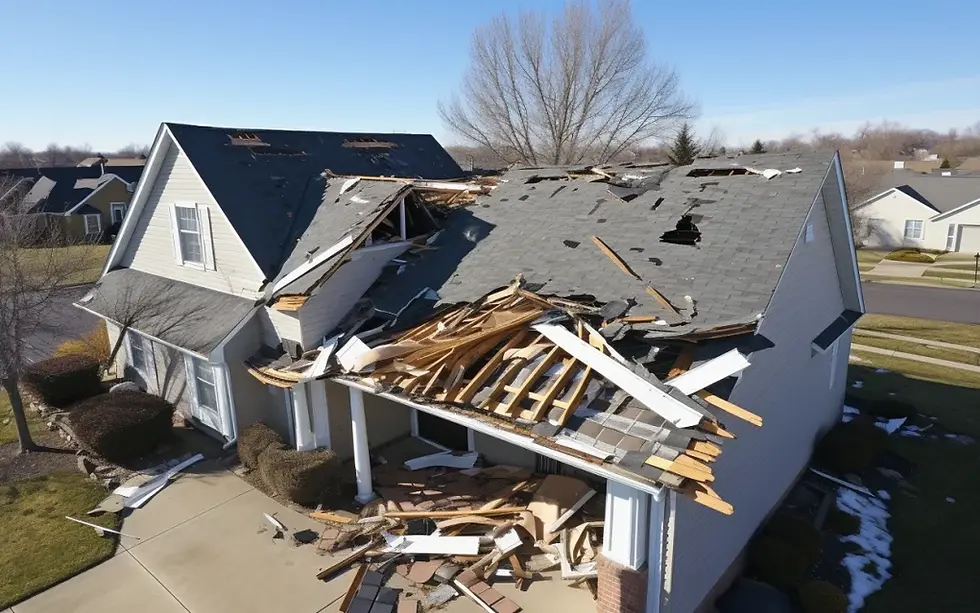



When disaster hits your home, you shouldn’t have to face the insurance company alone.
I spent 25 years on the insurance company side. Here’s what I see now from the other side of the table.
For most of my career I was the carrier’s adjuster. I know how claims get handled from the inside: the desk estimates, the coding, the file notes, the pressure to close. When I started representing homeowners as a public adjuster, I thought I knew what I’d find. I didn’t expect how often a claim goes wrong on one small detail the homeowner had no way to catch.
A few files from just the past couple of months:
🔹 A roof leak denied as “water damage” and “wear and tear.” The water damage exclusion in that policy covers five specific things: flood, sewer backup, sump discharge, groundwater and dam release. Rain coming through a failed roof flashing is none of them. We rebutted the denial, got a reinspection, and the claim that had been fully denied settled well into five figures.
🔹 A van went off the road and took out a family’s stone retaining wall. The insurer never sent anyone to look at it. It paid a desk estimate of under $6,000. The other driver’s insurer told the family to “go through your own carrier.” Our itemized estimate came in at more than six times that first payment.
🔹 A sewer line broke underground and sent contaminated water into a finished basement where two family members lived. It was reported as a “backup,” and that one word can decide whether a claim is covered at all. Months later, there was no repair estimate, no contents inventory, unfinished repairs and a displaced household.
🔹 A three-year-old house hit by hail. Two independent roofers said the roof had to be replaced. The insurer’s estimate didn’t have a single roofing line item.
🔹 Raccoons tore open a roof. The insurer paid for one side and denied the other under the “animal” exclusion. That exclusion lists birds, rodents, insects and domestic animals. A raccoon isn’t any of those.
🔹 A winter storm claim was still open six months later. No emergency repairs had been authorized, and the first check went to the mortgage company and stayed there.
None of these homeowners did anything wrong. They reported promptly, cooperated and trusted the process. But the policy is a contract written by the insurer, and the claim is adjusted by the insurer. When the words get read the wrong way, or the scope gets left short, the homeowner usually has no idea.

That’s why public adjusters exist. My job is to read the policy line by line, document the loss properly, put the estimate together and push until the claim is paid the way the contract says it should be.

If you have an open claim that doesn’t feel right (a denial, a lowball, or just silence), call me before you sign anything. I’m happy to take a look.
Alfred Smith, CPCU | Licensed Public Adjuster: MA • RI • CT617-697-2646 | alfredsmithcpcu.com
Every claim is different, and past results don’t guarantee future outcomes.


Comments